

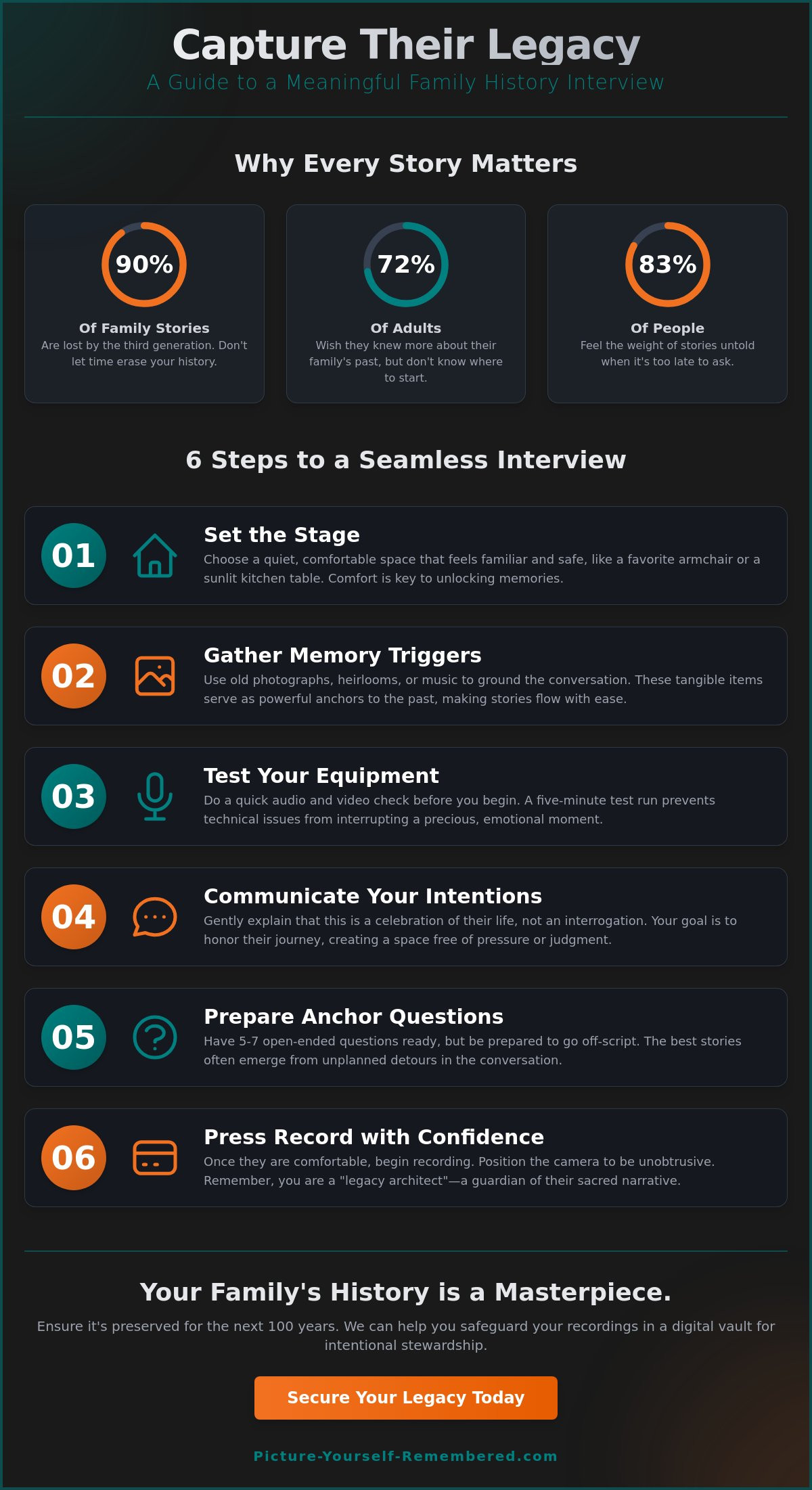
Imagine sitting in your living room on a rainy Tuesday afternoon, holding a faded photograph from August 1948, and realizing the one person who knew the story behind that specific smile is no longer here to tell it. It’s a heavy feeling that 83 percent of people experience according to a 2022 study on legacy, yet we often let the fear of an awkward silence stop us from hitting record. You deserve to feel confident as you bridge the gap between generations using the right interview questions for family history to unlock those cherished narratives before they fade.
We understand that starting these deep conversations can sometimes feel like trying to fold a fitted sheet; it’s confusing, a bit messy, and you’re never quite sure if you’re doing it right. This article serves as your gentle guide to moving past the technical overwhelm and the “where do I even start” jitters. You’ll discover a curated list of meaningful prompts that go beyond simple dates to reach the heart of a person’s essence. We will also provide a clear roadmap for conducting a smooth interview and ensuring your digital recordings remain safe for the next 100 years.
Key Takeaways
- Discover how to move beyond dry dates and facts to capture the living essence and emotional landscape of your loved one’s unique narrative.
- Create a gentle sanctuary for sharing by using “memory triggers” like old photographs to help cherished stories unfold with ease and clarity.
- Utilize our specially curated interview questions for family history to guide your narrator through the beautiful, winding chapters of their life.
- Master the art of video recording to keep your loved one comfortable, even if they usually treat a camera lens with more suspicion than a cat treats a new vacuum cleaner.
- Safeguard your family’s history for the next 99 years by learning how to secure your recordings in a digital vault for intentional stewardship.
What is a Family History Interview?
Think of a family history interview as a bridge built between generations. It’s a structured yet gentle conversation designed to capture the vibrant essence of a loved one before the fine details of their life drift away. While genealogy focuses on the rigid skeleton of dates, names, and locations, What is Oral History? is the practice of preserving the heartbeat within those facts. It’s the “why” behind the “when.” You aren’t just looking for the year your grandmother moved across the country; you’re looking for the scent of the air when she arrived and the nervous flutter she felt in her chest. Every life is a masterpiece, a unique gallery of experiences that deserves to be preserved with intentional stewardship and care.
To better understand this concept, watch this helpful video:
Why We Record Our Narratives
We often assume our family stories are permanent, but memory is a fragile thing. Historians often cite the “three-generation rule,” where family stories tend to vanish once the people who lived them and those who heard them firsthand pass away. By the time great-grandchildren arrive, nearly 90% of those original accounts are often lost to time. This is why understanding the importance of family stories acts as a foundational anchor for younger generations, giving them a sense of belonging. Hearing a voice, with its unique rhythm, cracks, and laughter, creates a visceral connection that a sterile transcript can’t match. It’s the difference between reading a recipe and tasting the actual pie. Plus, it’s the only way to prove that Uncle Bob’s “legendary” ten-pound trout wasn’t actually a very confused three-inch sardine.
The Role of the Legacy Architect
When you sit down to prepare your interview questions for family history, you step into the role of a legacy architect. You aren’t a reporter hunting for a scandalous scoop or a cold list of facts. You’re a guardian of a sacred narrative. This role requires a quiet dignity and a willingness to hold space for long pauses, sudden smiles, and the occasional tear. In this context, stewardship is the intentional, loving act of protecting and passing on a person’s life essence so it remains untarnished by the years. It’s about making sure the person across from you feels seen and heard.
Actionable Tip: Before you begin the actual interview, spend ten minutes in “active listening” mode without any recording devices. This helps your loved one feel comfortable and ensures the conversation flows naturally once the record button is pressed. Always check your microphone levels in a quiet room first; a beautiful story is hard to cherish if a loud refrigerator is humming over the best parts.
Preparing for the Conversation: A Step-by-Step Guide
Creating a lasting legacy begins long before you press the record button. It starts with the intentional act of stewardship, crafting a space where stories can breathe and memories can surface without rush. Choose a quiet corner of the home where the interviewee feels most at ease. A familiar armchair or a sun-drenched kitchen table often provides the comfort needed for deep reflection. A 2022 study by Ancestry found that 72% of adults wish they knew more about their family’s history, yet many feel overwhelmed by the process. You can ease this by gathering “memory triggers” beforehand. A 1945 silver locket or a collection of digitized old photos can serve as visual anchors, grounding the conversation in tangible history.
Before the guest arrives, test your equipment. A five-minute audio check prevents technical hiccups from shattering a delicate emotional moment. Communicate your intentions clearly; explain that this isn’t an interrogation, but a celebration of their life. Prepare a short-list of five to seven anchor interview questions for family history, but hold them loosely. The most profound insights often emerge when you follow the natural rhythm of the narrative rather than sticking strictly to a script.
Setting the Emotional Stage
Many elders dismiss their own experiences with the common refrain, “My life just isn’t that interesting.” You can gently counter this by validating the quiet beauty of their journey. Remind them that the small details of their daily life are the very things future generations will cherish most. Practice active listening by leaning in and offering your full presence. Use silence as a tool; often, the most poignant memories follow a long, thoughtful pause. To begin, use a gentle warm-up. Ask about a favorite childhood meal or the specific smell of their grandmother’s kitchen. This shifts the focus from the pressure of “history” to the joy of sensory recollection.
Technical Preparation Without the Jargon
You don’t need a film studio to capture the essence of a loved one. For lighting, simply have your subject face a window. This provides a soft, natural glow that honors their features; never place the window behind them, or they will disappear into a shadow. To ensure audio clarity, use the “pillow trick” by placing soft cushions around the room to dampen echoes. It’s also wise to check your power levels. While Grandpa might have the stamina to talk for three hours, your phone battery probably won’t. If you find yourself wanting to capture these moments with professional artistry, you might explore how a legacy guide can help you preserve these interview questions for family history in a timeless format.
The Essential Interview Questions for Family History
To capture the true essence of a person, we must move beyond the dry facts of a birth certificate. Effective interview questions for family history act like a lens, bringing blurry memories into sharp focus. You aren’t just recording dates; you are acting as a legacy architect, building a bridge between generations. Avoid “yes” or “no” queries that lead to dead ends. Instead, invite the narrator to paint a picture with “how” and “why” prompts. If you ask if they liked school, you might get a shrug. If you ask how the air felt on the first day of summer vacation, you’ll get a story.
A 2010 study from Emory University found that children who know their family’s “oscillating narrative”—the stories of both success and failure—show higher levels of emotional resilience. This makes your role as an interviewer a vital act of stewardship. Use sensory details to ground the conversation. Ask what the kitchen smelled like on a Sunday afternoon or the specific sound of the floorboards in their first home. These small details are the threads that weave a cherished narrative together.
Childhood and Roots
Start at the beginning by exploring the “essence” of their earliest years. Ask about their very first memory. Was it a flash of color or the sound of a lullaby? Inquire about the childhood home to bridge the gap back to previous generations. What did the dinner table represent in their house? Don’t forget to ask about school-day mischief. Every grandparent has at least one story of a prank that would probably get them grounded even today, proving that teenagers haven’t changed much since 1950.
Adulthood, Love, and Lessons
Shift the focus to the middle years where character is often forged. Ask how they met their partner and what they’ve learned about the quiet strength required for an enduring connection. Life isn’t just sunshine; it’s the storms too. Ask about the challenges they overcame and where they found their resolve during difficult times. Focus on what they are most proud of in their journey. Whether it’s a professional milestone or the simple act of showing up for their family, these are the moments that define a life’s work.
Reflections and Future Hopes
This final stage is where the heart of the story truly resides. Ask what advice they would give their 18-year-old self if they could travel back in time. They might suggest buying stock in that “fruit-named” computer company or simply reminding themselves to wear more sunscreen. What is their greatest wish for the generations that will follow them in 2050 or 2100? Ask how they want to be remembered by those who haven’t been born yet. These interview questions for family history ensure that their influence remains a guiding light long after the conversation ends.
Recording a Video Legacy: Actionable Tips
While written words carry weight, video offers the most intimate form of oral history preservation. It captures the gentle tremor in a voice when a grandmother speaks of her wedding day or the way a father’s eyes crinkle when he mentions his first car. These non-verbal cues account for roughly 80% of our emotional communication. When you record a loved one, you aren’t just documenting facts; you’re preserving their essence for those who haven’t been born yet.
To keep the narrator comfortable, ask them to look at you rather than the cold glass of the camera lens. This creates a natural, conversational warmth. If the family cat decides to stage a protest or a mid-interview walk across the table, let it happen. Those tiny, unscripted moments often become the most cherished parts of the film. Using the right interview questions for family history acts as your map, but the video itself is the landscape.
Remember to check in every 20 minutes. Storytelling is an act of deep generosity, and it can be physically and emotionally draining. A simple “How are you feeling?” or a quick water break ensures the narrator stays energized and present. If you notice their posture sagging or their voice growing thin, it’s time for a rest.
Directing the Narrative Flow
Your role is to be a quiet steward of the story. If a narrator wanders into a long, winding memory about a summer rainstorm in 1955, let them stay there for a while. These tangents often hold the most vivid sensory details. When you feel a story needs more depth, use gentle follow-up questions like “What was the air like that day?” or “Tell me more about that feeling of relief.” If tears arrive, don’t rush to turn off the camera. Hold a steady, empathetic presence. Silence is often where the deepest truths reside.
Capturing the Essence
Encourage the narrator to speak directly to their future descendants at least once during the session. This creates a powerful bridge across generations. When framing the shot, include a bit of their environment, perhaps a favorite bookshelf or a sunlit corner of the kitchen. You don’t need a professional studio to create something profound. In fact, “imperfect” videos with the hum of a distant refrigerator or a stumble over a word feel more authentic. It’s the sound of a life actually being lived. You can start this beautiful journey today when you document your life story with intentionality and love.
Securing the Story for the Next 99 Years
We’ve all felt that pang of worry when an old laptop refuses to wake up. It’s the “digital dark age,” a reality where roughly 15 percent of digital media becomes unreadable within a single decade. While you’ve gathered beautiful answers to your interview questions for family history, leaving those files on a plastic USB stick from 2012 or a social media profile is a significant gamble. Social platforms aren’t archives; they’re businesses that change terms or disappear entirely. You need a secure digital vault designed for long-term stewardship, acting as a sturdy bridge between your present self and a great-grandchild you may never meet.
Beyond the Hard Drive
Most cloud storage is built for your current life, not your multi-generational legacy. These services require active subscriptions and passwords that often get lost during life transitions. If a payment fails, your memories could be deleted. A dedicated system allows you to schedule story delivery for specific future dates, such as a wedding in 2075 or a graduation in 2099. There is a quiet dignity in knowing your family history is safe, held in a space where time cannot touch the warmth of your voice.
Starting Your Legacy Today
Action is the only way to beat the “someday” trap. Take one small, practical step this week: record just one 2-minute story on your smartphone. Talk about your favorite childhood summer or a lesson you learned the hard way. Waiting for the “perfect” time to record is like waiting for a cat to appreciate a high-end scratching post; it’s a lovely idea that rarely happens in reality. A Basic Membership provides the essential foundation for your digital time capsule, ensuring your interview questions for family history are never forgotten.
Don’t wait for a milestone that feels “important” enough. The best time to secure your legacy is today. We invite you to picture yourself remembered through the stories you choose to preserve today. Your life is a masterpiece, and every masterpiece deserves a safe home. By taking agency over your narrative now, you offer a priceless gift to the future. You are not just saving files; you are distilling the very essence of who you are for those who will one day go looking for you.
Preserving Your Masterpiece for the Next Century
Every life is a masterpiece waiting to be framed. You’ve learned how to prepare your heart for these sacred conversations and which interview questions for family history will unlock the most cherished memories. By following our guide to recording and storing these moments, you’re doing more than just saving a digital file; you’re building a bridge between the present and the future. Just make sure you check the microphone batteries first, because a silent film of Grandpa’s legendary fishing stories is a tragedy no family should ever endure.
Founded by Stanley Poe, our heart-centered service offers world-wide coverage to families across the globe. We provide a secure digital vault designed specifically for 99-year storage, ensuring your narrative remains intact for at least four generations. This process isn’t just about planning; it’s about distilling the beauty of your journey today. It’s time to move from the abstract beauty of a legacy to the concrete action of securing it for those who haven’t even been born yet.
Begin your journey as a legacy architect with a Basic Membership today. Your story is a priceless gift that deserves to endure with the utmost care and artistry.
Frequently Asked Questions
What are the best open-ended interview questions for family history?
The best interview questions for family history are those that invite sensory memories, such as asking what a grandmother’s kitchen smelled like on a Sunday morning. These prompts move beyond dry dates to capture the essence of a life. Focus on questions starting with “how” or “why” to encourage a narrative flow. This approach reflects the heart of their journey and creates a much richer story for future generations.
How long should a family history interview last?
Aim for a session length between 60 and 90 minutes to ensure your loved one stays energized and engaged. Research from the Smithsonian Institution suggests that after 90 minutes, both the interviewer and the narrator often experience a decline in focus. If the story is still unfolding, it’s much better to schedule a second 60-minute session later. This keeps the experience celebratory and prevents it from feeling like a chore.
What if my relative is reluctant to share their life story?
If a relative is hesitant, use a physical anchor like a 1950s photo album or a 40-year-old family heirloom to spark their memory. Shifting the focus to a tangible object creates a safe space for vulnerability. Just remember, even if they claim their life was boring, they’ve likely survived more fashion trends and technological shifts than a Silicon Valley CEO. Your gentle encouragement helps them see the value in their narrative.
Can I use my smartphone to record a high-quality family interview?
You can definitely use a modern smartphone, like an iPhone 14 or Samsung S23, to record a beautiful legacy film in 4K resolution. To ensure the quality matches the importance of the story, place the phone on a $25 tripod to avoid shaky footage. Position the camera about 3 feet away from your relative and use a simple lapel microphone. This setup ensures their voice is captured with clarity and warmth.
What is the difference between an oral history and a regular interview?
An oral history focuses on the narrator’s personal interpretation of events, while a regular interview often seeks specific facts or data points. When you use interview questions for family history, you’re acting as a steward of their unique truth rather than just a reporter. This process honors the individual’s perspective, allowing their wisdom and quiet dignity to shine through. It transforms a simple conversation into a lasting piece of historical art.
How do I store a video legacy so it doesn’t get lost over the years?
Protect your digital legacy by following the 3-2-1 storage rule to prevent data loss over the next 20 years. This means keeping 3 separate copies of the video, using 2 different types of media like an external SSD and a cloud service such as Google Drive. Store at least 1 copy in a different physical location, like a sibling’s home. This ensures the narrative remains safe from hardware failure or accidental deletion.
Should I provide the questions to my relative before we start recording?
Providing a list of 5 key themes about a week before the recording helps your relative feel prepared and calm. This lead time allows them to reflect on their cherished memories without the pressure of being on the spot. It prevents that deer in headlights look and ensures the conversation flows with a graceful, steady cadence. Giving them time to prepare honors their story and results in a deeper, more thoughtful reflection.
What should I do if the interview becomes very emotional or sad?
If the conversation turns toward a difficult or emotional memory, immediately offer to pause the recording for a 10-minute break. Acknowledge the weight of the moment with a gentle comment, letting them know it’s okay to skip a topic. Your role is that of a compassionate guide, prioritizing their emotional well-being over the completion of a checklist. Creating this safe space allows for genuine healing and a more authentic legacy.
