

In 2023, a study by the Digital Legacy Association revealed that 85% of adults have no clear plan for their online accounts, leaving many families struggling for months to recover a single cherished video. It is a heavy burden for loved ones already navigating grief, but you can change that story by learning how to appoint a digital executor today. This person acts as a gentle steward for your online presence, ensuring that your most precious video memories and digital narratives aren’t locked away forever behind a cold screen. While a traditional executor handles your physical home, this digital guardian ensures your virtual legacy remains a living part of your family history.
You probably agree that a lifetime of photos and stories is far too precious to be left to the mercy of a tech company’s automated support bot. We will show you exactly how to select and legally authorize a guardian who understands the weight of your personal narrative. This guide offers a simple roadmap to organize your digital keys and bridge the gap between a traditional will and a modern digital plan. Let’s be honest, your “Password123” strategy is about as secure as a screen door on a submarine. By the end of this article, you’ll have the practical steps needed to secure your essence and provide lasting peace of mind for those you love most.
Key Takeaways
- Discover why a traditional will often leaves your digital legacy locked away and how to provide the “heart-centered keys” your family needs to access your cherished memories.
- Move beyond the “tech-savvy” myth to choose a digital guardian based on their emotional intelligence and deep respect for your life story.
- Master the simple 5-step process on how to appoint a digital executor, starting with a digital asset inventory that captures everything from social media to your most precious video archives.
- Reframe digital planning as a profound gift of peace for your grieving family, reducing their future administrative burden so they can focus on celebrating your essence.
- Learn to use the “set it and forget it” model to simplify your steward’s journey—because protecting your legacy shouldn’t feel like a second full-time job for your loved ones.
Understanding the Role of a Digital Executor in 2026
Imagine your life as a sprawling story told across dozens of screens. In 2026, our legacies aren’t just found in dusty boxes in the attic; they live in the cloud, in voice notes, and in the secure vaults of our banking apps. A digital executor is the person you choose to act as the steward of this modern history. They’re the ones who will archive your favorite memories, manage your online subscriptions, or gracefully close the door on your social media accounts. Most importantly, they are the brave souls who will finally decide if those 4,000 blurry photos of your cat are worth keeping for the grandkids.
Learning how to appoint a digital executor is about more than just checking a box on a legal form. It’s an act of love and intentionality. A traditional will executor often focuses on physical property, yet they frequently lack the legal “keys” to enter your digital home. Without specific wording in your estate plans, service providers may deny your family access to your most precious memories to protect privacy laws. You are essentially building a bridge between your physical world and your virtual existence.
The Legal Reality: Why Passwords Aren’t Enough
Sharing your master password on a sticky note might feel like a simple solution, but it often puts your loved ones in a difficult legal spot. Most “Terms of Service” agreements actually forbid sharing login credentials, and doing so can technically count as unauthorized access. This is why the Revised Uniform Fiduciary Access to Digital Assets Act (RUFADAA), which has been adopted by 46 states as of 2024, is so vital. It creates a legal pathway for your representative to manage your accounts properly.
- Legal Authority: This is the court-recognized right to manage assets, which is different from simply knowing a password.
- Terms of Service (ToS): These are the private contracts you sign with companies like Google or Apple that often override a general will.
- Actionable Tip: Check the “Legacy Contact” settings on your smartphone and social media accounts today to name your representative directly within the platform.
Sentimental vs. Financial Digital Assets
We often think of digital assets as purely financial, like a PayPal balance or a crypto wallet. While those require strict security, your “essence” is found in your sentimental assets. These are the video stories and candid photos that form your digital time capsule. When you consider how to appoint a digital executor, look for someone who values your narrative as much as your net worth. They are the keepers of your light, ensuring that your digital footprint remains a warm reflection of the life you lived rather than a scattered collection of data.
Choosing Your Digital Guardian: Who Should You Appoint?
Selecting the right person to hold the keys to your digital life is a profound act of trust. It’s easy to assume you need a software engineer or a teenage relative who lives on TikTok. However, the technical side is often the simplest part. When you consider how to appoint a digital executor, you are looking for a steward of your story, not just a password manager. You need someone who understands the weight of your memories and the quiet dignity of your private reflections.
Think of your digital life as an extension of your home. You wouldn’t give your house keys to someone just because they’re good at fixing a leaky faucet; you give them to someone who respects your space. This is why emotional intelligence often outweighs coding skills. Your guardian needs to be organized enough to navigate the legal steps to appoint a digital executor, but they also need the grace to handle your sensitive data with care.
Many people now adopt a two-person strategy to balance the workload. One person handles the cold, hard numbers of digital banking and subscriptions. Another, perhaps a closer friend or a creative soul, manages the legacy side: the photos, the journals, and the messages meant for future generations. This ensures that while the bills are paid, your essence is also preserved with love. It’s a way to ensure every part of your footprint is treated with the specific attention it deserves.
The Checklist for a Great Digital Executor
- Instructional Clarity: They can follow a detailed plan without feeling buried by the logistics.
- The Privacy Pact: They must honor the “don’t read my 2009 DMs” rule. Some things are meant to stay in the past, even for a trusted guardian.
- Longevity: If you’ve scheduled messages to be delivered in 25 or 50 years, choose someone likely to be around to manage those long-term gifts.
Common Mistakes in Selection
The most frequent error is choosing the “techie” of the family who has 4,000 unread emails and a perpetually cracked phone screen. If they can’t manage their own digital chaos, they won’t manage yours with the necessary care. Another slip-up is forgetting a backup. Life is unpredictable. Always name a successor to ensure your narrative doesn’t hit a dead end just because your first choice moved to a remote island without Wi-Fi. Statistics from estate planning surveys suggest that nearly 60 percent of people fail to name a secondary contact, leaving their digital assets in a state of limbo.
Actionable Tip: Before you sign any papers, have a “coffee and cloud” chat. Sit down with your potential guardian and explain why you chose them. It’s a beautiful way to curate your legacy together while ensuring they feel comfortable with the responsibility of your digital heartbeat.
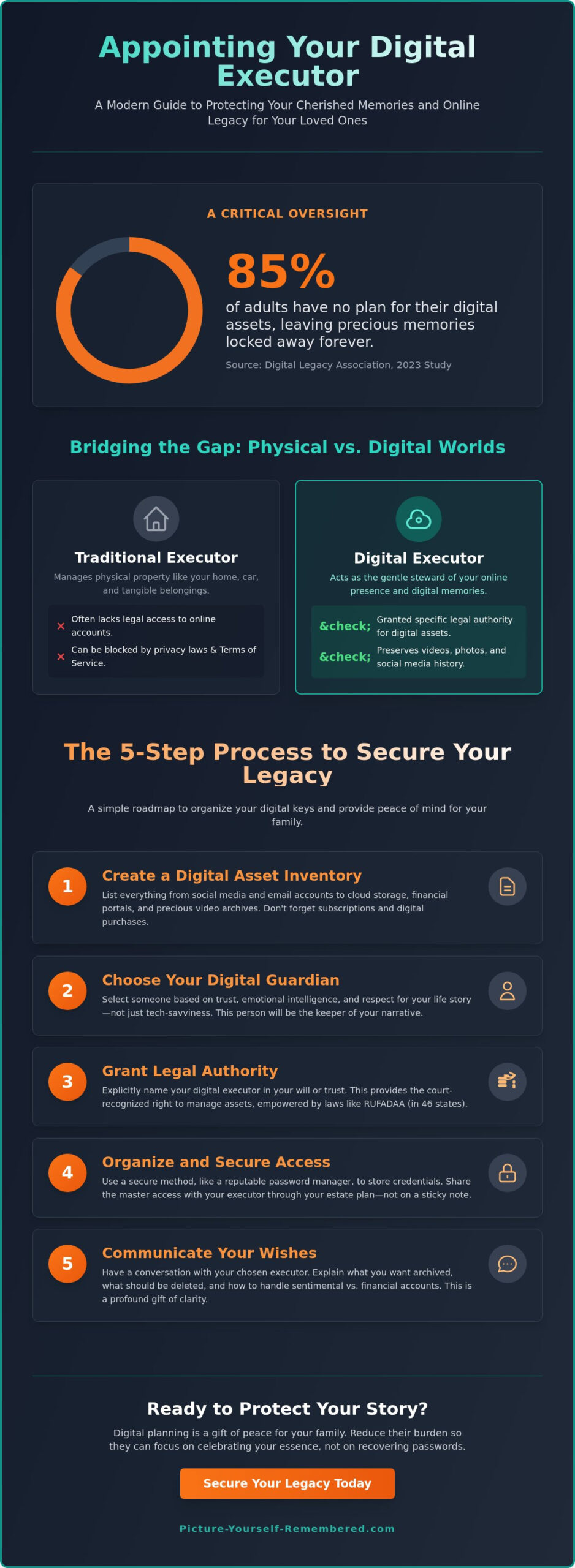
The 5-Step Process to Appoint a Digital Executor
Creating a plan for your digital life is a profound act of stewardship. It ensures that your online presence, from your cherished family photos to your professional creative works, is handled with the same dignity you applied to your physical belongings. Learning how to appoint a digital executor involves more than just picking a name; it is about building a bridge between your present life and your enduring narrative.
Step 1: Inventory Your Digital World
Your first task is to create a Digital Asset Inventory (DAI). This document serves as a map for your loved ones, guiding them through your social media profiles, cloud storage, and specialized legacy platforms. You should include your accounts on Picture Yourself Remembered, where your most meaningful stories are stored. Don’t overlook hidden assets like registered domain names, which can expire if not managed, or digital loyalty points which often hold significant value. A 2023 study by AARP suggests that the average person has over 100 digital accounts, so using a simple spreadsheet or a dedicated estate app is a practical way to stay organized.
Once your list is complete, decide on the final disposition for each platform. Do you want your Facebook profile to be memorialized as a place for friends to gather, or would you prefer it be deleted entirely? Perhaps you want your cloud-based photo library transferred to a specific family member. Being clear about these intentions removes the heavy burden of guesswork from your survivors.
Step 3: Making It Legally Binding
A handshake agreement isn’t enough to grant access to protected accounts. You need to formalize your choice in your legal Will or through a Codicil. This involves writing a specific Digital Power of Attorney clause that grants your representative the authority to manage these assets. Since the Revised Uniform Fiduciary Access to Digital Assets Act (RUFADAA) was expanded in 2016 to cover most states, having this legal language is essential for bypassing strict privacy laws.
When choosing a digital executor, look for someone who possesses both the technical skill to navigate online platforms and the emotional intelligence to respect your privacy. You should keep your legal documents separate from your actual password list for security reasons. Consulting an estate attorney for the legal heavy lifting ensures that your wishes are enforceable and your essence is protected from digital decay.
Step 5: The Handover
The final step is providing the master key. This is best done through a Letter of Instruction, which is a personal guide rather than a rigid legal document. It explains the “why” behind your choices and provides the practical “how” for accessing your accounts. Use a reputable password manager to store your credentials; it is the ultimate legacy tool because it only requires you to share one single entry point with your executor.
Just remember that your master password should be complex and unique. Please don’t make it “Password123” or the name of your first goldfish, unless you want your digital legacy to be as vulnerable as a snack in a room full of toddlers. By sharing this access securely, you grant your digital guardian the peace of mind they need to honor your journey with grace and precision. Understanding how to appoint a digital executor is a gift of clarity that allows your light to shine long after the screen goes dark.
Overcoming the “Emotional Hurdle” of Digital Planning
Many of us feel a natural hesitation when looking toward the horizon of our own lives. The most common objection is simply, “I’m just not ready to think about this yet.” It is a gentle, human resistance. However, shifting your perspective can transform this task from a heavy obligation into a profound act of love. When you learn how to appoint a digital executor, you aren’t just filling out paperwork; you’re curated a path for your family to follow through the mist of their future grief. It is a gift that reduces their administrative burden when they are least equipped to handle it.
There is an immense, quiet comfort in knowing your intentions are secure. The process of recording messages for loved ones becomes even more meaningful when you know those words will actually reach their destination. You’re ensuring that your essence, captured in video or text, doesn’t sit locked behind an unbreakable password. It’s about stewardship of your story, making sure your voice remains a steady presence for those you leave behind.
Managing the Burden of Grief
An unmanaged digital estate often creates what we call “digital ghosts.” These are the unwanted notifications, automated birthday reminders, or recurring subscriptions that haunt a family’s devices after a loss. These small pings can feel like a thousand tiny stings during a period of mourning. Your executor acts as a sentinel, silencing this digital noise so your family can focus on the warmth of your memory instead of the frustration of technical glitches. Think of this as digital housekeeping for the soul. It spares your spouse from spending 45 minutes on hold with a tech company’s customer service department, which is a special kind of purgatory no one should face while grieving.
The Joy of a Secured Narrative
We invite you to shift your focus from finality to endurance. This isn’t about the end; it’s about how your personal legacy remains intact for 99 years or more. A Digital Guardian serves as the vital bridge between your present voice and your family’s future, protecting the narrative you’ve spent a lifetime building. By taking these steps, you ensure that your history isn’t just a collection of data, but a living masterpiece that continues to inspire your grandchildren and their children. It provides a sense of preparedness that brings a lasting, deep peace to your daily life.
Ready to protect your story for the next generation? Discover how we help you secure your digital legacy today.
Integrating Your Appointment with Picture Yourself Remembered
Choosing the right person for your digital legacy is a beautiful act of stewardship. Once you understand how to appoint a digital executor, the next step is ensuring they have the right tools to honor your essence. Our platform simplifies this responsibility by acting as a bridge between your legal plans and your heart’s intentions. It’s like leaving a map to a hidden treasure, but without the pirates or the confusing riddles.
Our “Set It and Forget It” model ensures your executor doesn’t feel overwhelmed by technical hurdles. They only need to know one thing: that you have a plan with us. You can schedule deliveries for birthdays, anniversaries, or milestones up to 99 years into the future. This long-term vision transforms a simple file into a living narrative that continues to speak long after you’ve left the room. It’s about distilling the beauty of your life into messages that arrive exactly when your family needs them most.
You’ve lived a life worth remembering. It is a masterpiece composed of quiet moments and grand adventures. By integrating our service into your formal digital plan, you make sure someone has the keys to the gallery where your best memories are stored.
The Role of a Basic Membership
This membership acts as a secure digital vault for your most precious messages. It is designed to be a safe space where your story is protected with quiet dignity. When you create your Digital Asset Inventory, simply list Picture Yourself Remembered as a primary account. Our system handles the complexities of the “when” by automating your scheduled releases. Your executor’s role is beautifully simple; they just ensure the “who” remains accurate and that the connection is maintained. This ensures that your digital stewardship is a gift rather than a chore for those you leave behind.
Your Next Steps Toward Peace of Mind
Taking agency over your story today provides an incredible sense of relief. Now that you know how to appoint a digital executor, you can focus on the creative joy of building your legacy. Think of it as a time capsule that doesn’t involve a shovel or the risk of accidentally digging up your neighbor’s prize-winning petunias. You are the architect of your own memory, and the foundation starts with a single step.
Begin your journey of digital remembrance today
Take the Next Step in Your Legacy Journey
Securing your digital footprint is more than a technical chore; it’s a profound act of love for those you leave behind. By following the 5-step process we’ve discussed, you’ve moved from uncertainty to empowerment. You now understand that choosing a digital guardian requires a blend of trust and technical savvy. Learning how to appoint a digital executor ensures your private stories and cherished memories don’t vanish into the cloud when you do. Let’s be honest, nobody wants their grandkids to spend years trying to guess a password that was probably just the name of your first goldfish.
Founded by Stanley Poe to bridge the generational gap, Picture Yourself Remembered offers a safe harbor for your most precious narratives. We provide secure storage for up to 99 years, giving you the peace of mind that your essence remains accessible for nearly a century. Our team offers compassionate support throughout your digital journey, treating your life story with the quiet dignity it deserves. You don’t have to navigate these technical waters alone. Start preserving your video legacy with a Basic Membership today and give your loved ones the gift of your voice, your smile, and your enduring presence. Your story is a masterpiece, and it’s time to ensure the gallery stays open.
Frequently Asked Questions
Is a digital executor the same as the executor of my Will?
Not necessarily, though they can be the same person. A digital executor focuses specifically on your online presence and electronic assets. While your traditional executor handles physical property and bank accounts, your digital choice manages your virtual soul, such as photo archives and social accounts. You might choose your tech-savvy niece for the digital role and your detail-oriented brother for the physical Will.
Can I appoint more than one digital executor for different accounts?
Yes, you can designate different people to manage specific parts of your digital life. You might want a close friend to handle your personal blog while your business partner manages your professional LinkedIn profile. This ensures each part of your narrative is handled by someone who truly understands that specific chapter of your life. It’s like casting a play; you want the right person in the right role.
What happens to my social media if I don’t appoint a digital executor?
Without a designated person, your social media accounts may remain in a digital limbo or be deleted according to platform policies. Facebook allows users to choose a legacy contact, but if you haven’t, your family might struggle for months to gain access or memorialize your page. Platforms like Google have an Inactive Account Manager feature that kicks in after 3 to 18 months of silence to protect your privacy.
Do I need a lawyer to officially appoint a digital executor?
You don’t strictly need a lawyer to begin the process, but including your choice in your legal Will ensures it’s enforceable. Many people use online templates or legacy planning tools to document their wishes first. However, a 2021 study by Gallup showed that only 46 percent of US adults have a Will. Consulting a professional can ensure your digital wishes don’t get lost in legal red tape.
How do I securely give my digital executor my passwords without compromising safety?
The most secure way to share access is through a password manager like LastPass or 1Password. These services allow you to designate an emergency contact who can request access to your vault after a specified waiting period. Avoid writing passwords on sticky notes; your cat might find them, and frankly, cats are terrible at maintaining digital security. This method keeps your data encrypted while ensuring your steward has the keys.
Can a digital executor access my private messages and emails?
Access to private communications depends on the specific permissions you grant and the platform’s terms of service. Under laws like RUFADAA, an executor generally needs explicit consent from you to view the content of your electronic communications. If you want your executor to preserve your heartfelt emails to your children, you must state that permission clearly in your legal documents to bypass standard privacy blocks.
What is the RUFADAA, and why does it matter for my digital estate?
RUFADAA stands for the Revised Uniform Fiduciary Access to Digital Assets Act, which has been adopted in 46 US states as of 2023. This law provides the legal framework for your executor to interact with tech companies on your behalf. Understanding how to appoint a digital executor under this act ensures your chosen person has the legal authority to manage your assets without being accused of hacking your own accounts.
How often should I update my digital asset inventory and executor choice?
You should review your digital estate plan at least once a year or after major life events. Technology moves fast, and a platform you used daily in 2022 might be obsolete by 2025. Set a recurring calendar reminder for a legacy checkup each January. Keeping your inventory fresh ensures your essence is captured accurately and your chosen steward is still the best person for the job.
