
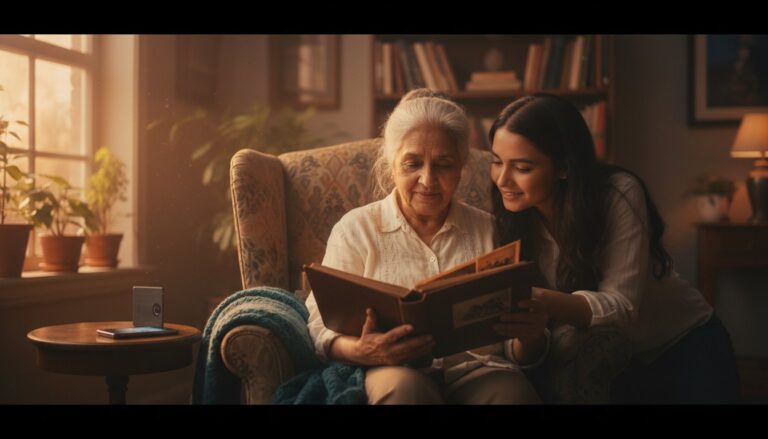
What if the most significant history book you will ever read isn’t found in a library, but is sitting right across from you at the kitchen table? We often feel a quiet ache when we realize how much of our family story remains unrecorded, yet the thought of starting can feel daunting. You might worry about tech glitches or wonder if your grandfather will suddenly get stage fright the moment the camera turns on. Learning how to interview a grandparent about their life is more than just a project; it is a sacred act of witnessing a journey that deserves to be remembered forever.
You don’t need a Hollywood budget or a professional film crew to capture something profound; your smartphone is actually quite brilliant, even if it does occasionally fail to recognize your face before you’ve had coffee. In this guide, you’ll discover how to transform a simple conversation into a timeless video legacy that your family will cherish for generations. We will walk through choosing heart-centered questions, overcoming shyness, and using Video Message Storage to ensure these stories are never lost. It’s time to bridge the gap between the past and the future, one story at a time.
Key Takeaways
- Bridge the generational gap by capturing the unique expressions and voice that make your grandparent’s story a one-of-a-kind heirloom.
- Learn exactly how to interview a grandparent about their life by setting a soulful stage and using old photo albums to unlock forgotten memories.
- Master the use of open-ended questions that gently guide your loved one from their earliest childhood traditions through the meaningful milestones of adulthood.
- Apply simple smartphone recording techniques to ensure high-quality sound and lighting. You don’t need a film crew to create a masterpiece, even if your current tech skills are usually limited to “turning it off and on again” while hoping for the best.
- Secure these precious moments against digital loss by utilizing Video Message Storage and a Scheduled Delivery System for your family’s future milestones.
Why Your Grandparent’s Story is the Ultimate Family Heirloom
There is a specific kind of magic in the way a grandparent tells a story. It isn’t just the words they choose; it’s the gentle rasp in their voice, the rhythmic way they gesture with their hands, and the light that enters their eyes when they recall a moment from fifty years ago. When you set out to learn how to interview a grandparent about their life, you aren’t just collecting data or filling out a family tree. You are capturing the very essence of a human being. This living record serves as a bridge between the “Greatest Generation” and the digital natives of “Gen Alpha,” offering a sense of continuity that physical objects simply cannot match.
Think of digital video as the modern version of the family campfire. For centuries, wisdom was passed down through spoken word and shared presence. Today, we have the incredible ability to preserve that presence indefinitely. By recording these conversations, you transform the heavy weight of “I wish I knew” into the lasting peace of “I’m so glad I have this.” You are creating a treasure that grows more valuable with every passing year.
To better understand the joy of this process, watch this helpful video for some initial inspiration:
The Magic of Oral History
Oral history is a living, breathing record of a person’s journey. Unlike a written genealogy, which often feels like a cold list of names and dates, a video legacy captures the soul behind the statistics. These stories build profound resilience in younger family members. When children hear about the obstacles their ancestors overcame, it provides them with deep emotional roots. They begin to see themselves as part of a long line of survivors and dreamers. While a photo shows you what they looked like, a recorded interview shows you who they were.
Overcoming the ‘My Life is Boring’ Hurdle
Many grandparents are humble to a fault. They might resist the camera because they believe their lives were unremarkable. Your job is to gently remind them that their “ordinary” is our “extraordinary.” We don’t need tales of world-shaking events to find value in their experience. We want the small, sensory details: the sound of the radio in their first apartment, the texture of their favorite childhood toy, or the specific way the air smelled before a summer storm. Remind them that even if they didn’t fight a dragon, their 1970s hairstyle is a legend in itself. By focusing on these intimate moments, you help them see the masterpiece they have lived. It’s about honoring the quiet dignity of a life well-traveled.
Preparing for the Conversation: Setting the Stage for Connection
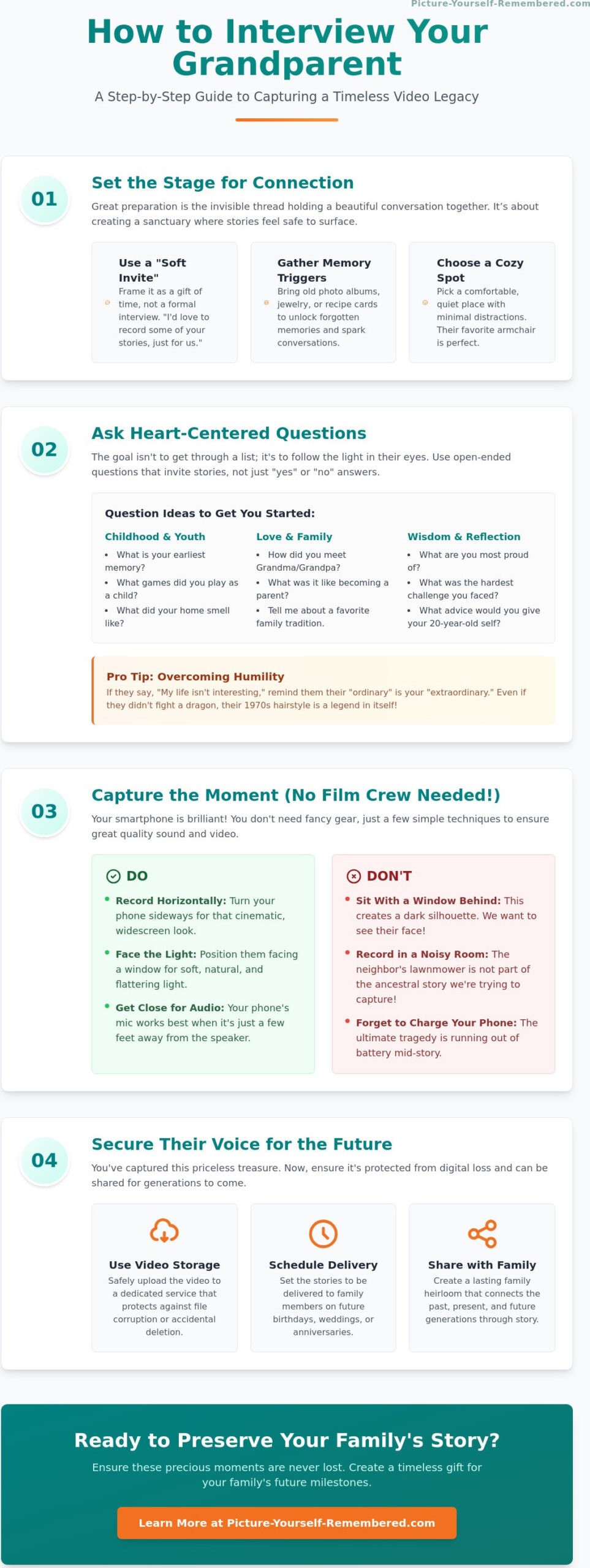
Great preparation is the invisible thread that holds a beautiful conversation together. It’s about creating a sanctuary where stories feel safe to surface. When you are figuring out how to interview a grandparent about their life, the first step isn’t technical; it’s relational. Start with a “soft invite.” Instead of making it sound like a formal appointment or a 60-minute news special, try saying, “I’ve been thinking so much about your stories lately, and I’d love to sit down and record some of them just for us.” This approach removes the pressure of performance and frames the experience as a gift of time and attention.
To help the memories flow, gather “memory triggers” before you sit down. Old photo albums, a piece of jewelry with a story, or even a favorite recipe card can act as a key to a locked door. These items provide a physical anchor for abstract memories. If you find yourself stuck on where to begin, resources like 99 Questions To Ask Your Grandparents can offer a wonderful spark. Remember, the goal isn’t to get through a list. The goal is to follow the light in their eyes when a specific topic makes them lean in.
Environment and Comfort
The setting of your interview should feel like home. A favorite armchair or the familiar wood of the kitchen table is far superior to a sterile, formal room. Comfort breeds vulnerability. Before you press record, take a moment to manage potential distractions. Silence your phones, settle the pets in another room, and perhaps address the ever-ticking grandfather clock that sounds like a tense countdown on a game show. Ensure there is a glass of water, a warm cup of tea, and their favorite snacks within reach. These small acts of care show that you value their comfort as much as their words.
The Interviewer’s Mindset
Your presence is the most important tool you have. Practice active listening by using a gentle nod and a warm smile rather than constant verbal affirmations like “uh-huh,” which can clutter the audio. Be prepared for the silence. Sometimes the most profound realizations happen in the quiet moments between sentences. It’s also vital to prepare yourself for the emotional weight of the stories. If the conversation turns toward a difficult memory, it’s okay to cry together. This shared vulnerability is what deepens your bond. For more guidance on the emotional side of this process, you might find our guide on recording messages for loved ones helpful. Once the stories are captured, you can ensure they remain a permanent part of your family history through Picture-Yourself-Remembered.com.
The Heart of the Interview: Questions That Spark Vivid Memories
The beauty of a life isn’t found in a simple timeline of dates, but in the texture of the stories that fill the gaps between them. When you are exploring how to interview a grandparent about their life, think of yourself as a gentle curator of their most precious memories. You aren’t just looking for facts; you are looking for the feelings and lessons that shaped their world. Start with the “Early Years” to build a foundation of comfort. Ask about the kitchen where they ate breakfast as a child or the specific games they played on summer evenings before the streetlights came on. These sensory details often act as a gateway to deeper, more significant recollections.
Move into the “Middle Chapters” by asking about their first job, their early parenthood, or the moment they realized they were in love. These are the years of building and striving. The importance of documenting their stories cannot be overstated, as these narratives provide a roadmap for the generations who will follow in their footsteps. Don’t forget the “Wisdom Round” and the quirky details that make them who they are. Record their favorite jokes or those classic “Grandma-isms” that everyone in the family quotes but nobody can replicate. If they give you advice for a wedding in the year 2075, listen closely; they might suggest that the secret to a happy marriage is always having a secret stash of high-quality chocolate.
Open-Ended Questions vs. Yes/No Questions
The phrase “Tell me about…” is the most powerful tool in your kit. If you ask “Were you happy?”, you might get a simple “Yes.” If you ask “What was a day that made you feel truly alive?”, you invite a vivid scene. If they give a one-word answer, don’t panic. Gently pivot by asking about a specific detail from that time, like the color of their first car or the name of a neighbor they remember. This practice helps them move from a logical response to a narrative one.
Questions for Future Generations
End your conversation by looking toward the future. Ask what they want their great-great-grandchildren to know about the family legacy. This is your chance to capture their hopes for a world they will never see but will certainly shape through their influence. What advice would you give to someone starting their first job fifty years from now? What is the one value you hope never leaves our family? These final questions ensure that their voice remains a guiding light for centuries to come.
Capturing the Moment: Practical Tips for Recording a Timeless Video
Recording a life story shouldn’t feel like a high-stakes television production. It is, at its heart, an act of love and intentionality. When you are mastering how to interview a grandparent about their life, remember that the most expensive camera in the world cannot replace the intimacy of a shared moment. Your smartphone is a powerful tool, perfectly capable of capturing the subtle twinkle in their eye or the gentle curve of a smile. The goal isn’t cinematic perfection; it is the preservation of a presence that will one day be a bridge to the past for your children.
One of the simplest ways to make the recording feel natural is the “Eye Level” rule. Position the camera so the lens is level with your grandparent’s eyes. This creates a sense of equality and direct connection, making the viewer feel as though they are sitting right across from them at the table. If the camera is placed too low, it can feel like an interrogation. If it’s too high, the perspective feels detached. We want this video to feel like a warm embrace, not a news report. Don’t worry about tech glitches. If the camera slips or you have to restart, laugh it off. These unpolished, human moments often become the most precious parts of the legacy.
Lighting and Sound for Beginners
You don’t need a professional lighting kit to get a beautiful shot. Simply have your grandparent face a window so the natural light falls softly on their features. Never place the window behind them, as this will turn them into a dark silhouette. We want to see the joy in Grandma’s expressions, not a shadowy figure that looks like she’s in witness protection. Before you start, do a quick “Silent Room” check. Turn off the humming air conditioner or the buzzing refrigerator for a few minutes. These small adjustments ensure their voice remains the clear, steady focus of the recording.
Keeping the Camera Steady
A shaky video can be distracting, but you don’t need to buy a fancy tripod to solve the problem. A “bookshelf tripod” works wonders; simply prop your phone against a stack of books at the correct height. Always record in horizontal, or landscape, mode. While vertical video is popular on social media, horizontal video is much better for long-term viewing on televisions and computers. This simple choice ensures the footage remains timeless. For more detailed advice, you can explore our guide on how to create a video legacy. Once you have captured these beautiful moments, you can secure them for the long term with Video Message Storage.
Beyond the Recording: Securing Their Voice for the Next 99 Years
The moment you hit “stop” on the recording, you’ll likely feel a profound sense of relief and joy. You’ve successfully navigated how to interview a grandparent about their life, and you now hold a piece of living history in your hands. However, the journey doesn’t end when the camera turns off. Digital files are surprisingly fragile. A laptop can be dropped, a hard drive can fail, and social media platforms can change their terms or disappear entirely. If you were wondering how to interview a grandparent about their life in a way that truly lasts, the answer lies in what you do after the conversation ends.
Think of this stage as building a digital home for your family’s soul. While it’s wise to follow the 3-2-1 rule of backups, which suggests keeping three copies on two different types of media with one copy stored off-site, the most reliable way to ensure long-term access is through a dedicated service. Let’s be honest: your digital legacy should definitely last longer than that sourdough starter everyone tried to keep alive during the pandemic. By using a secure Video Message Storage system, you move the file out of the “junk drawer” of your computer and into a space where it is protected and prioritized.
What is a Digital Legacy Service?
A digital legacy service is a secure platform specifically designed to store and deliver personal media across decades. It’s different from standard cloud storage because it’s built with the intention of endurance. It bridges the gap between the technology we use today and the world our great-grandchildren will inhabit 99 years from now. If you’re curious about the specifics of this journey, you can learn more about how picture yourself remembered works to keep these stories accessible for a lifetime.
Making the Delivery Special
One of the most beautiful aspects of this process is the ability to schedule a legacy. Imagine your child receiving a video of their grandfather’s advice on their 30th birthday, or your niece hearing a family joke on her wedding day years from now. A Scheduled Delivery System allows these stories to arrive exactly when they are needed most. You can even pair the video with a digital time capsule of photos and letters to create a multi-layered experience. This isn’t just about saving a file; it’s about ensuring that the light of your grandparent’s influence continues to shine on future milestones. Knowing the story is safe provides a peace of mind that is truly priceless.
A Legacy That Echoes Through Time
You now possess the tools to transform a quiet afternoon into a bridge across generations. By choosing a comfortable setting, asking heart-centered questions, and using simple tech tricks, you’ve ensured that your family’s most precious stories won’t fade with time. Learning how to interview a grandparent about their life is a profound act of love that rewards both the storyteller and the listener. It moves beyond a simple recording and becomes a living presence that your children and their children will eventually hold dear. We want your descendants to hear these stories clearly, rather than finding a corrupted file that won’t open on their futuristic holographic headsets.
Now is the time to ensure those memories have a permanent home. Our compassionate, founder-led service is specifically designed for generational storytelling, offering a secure way to pass down your history. Start building your family’s digital vault with a Basic Membership today. With Video Message Storage designed to last for up to 99 years, you can rest easy knowing your grandparent’s voice is safe. Take this small step today to give your future family a gift they will treasure forever.
Frequently Asked Questions
What if my grandparent gets emotional or starts crying during the interview?
Lean into the emotion rather than rushing to fix it. If they start to cry, simply offer a hand to hold or a moment of silence to show you are fully present. It’s perfectly okay to pause the recording if they need a break, but often these tender moments are the most honest parts of the story. Remember, your goal is connection, not a polished performance. Shared tears can actually strengthen the bond you are building.
How long should a grandparent interview typically last?
Aim for 45 to 60 minutes to prevent fatigue for both you and your loved one. Short, focused sessions are much better than one marathon meeting that leaves everyone exhausted. You can always schedule a second “episode” to cover different decades of their life. If they get on a roll and want to keep talking, follow their lead, but keep a close eye on their energy levels throughout the chat.
What are the best questions to ask a grandparent with memory loss or dementia?
Focus on sensory memories and early life rather than recent events. Ask about the song they sang most as a child or the specific smell of their mother’s kitchen. Using physical “memory triggers” like an old photograph or a piece of textured fabric can help anchor their thoughts. When learning how to interview a grandparent about their life who has memory challenges, patience and gentle prompts are your most effective tools.
Do I need to hire a professional videographer to record the life story?
No, your smartphone is more than enough to capture a beautiful and meaningful legacy. Professional crews can sometimes make a grandparent feel self-conscious or “on the spot,” which hinders the natural flow of conversation. The intimacy of a one-on-one chat with a grandchild usually produces much more heartfelt stories. Plus, you won’t have to explain to a stranger why Grandpa thinks his 1960s bowling trophy is a national treasure.
How do I save a large video file so it doesn’t get lost or deleted over the years?
Use a dedicated digital vault rather than relying on a single laptop or a social media account. Standard cloud storage often lacks the permanence needed for generational archiving. By utilizing Video Message Storage, you ensure the file is protected against hardware failure and accidental deletion. This provides a secure way to keep the recording accessible for decades without worrying about technology shifts or lost passwords as the years go by.
Can I schedule a video message to be sent to my grandchildren in 50 years?
Yes, you can use a Scheduled Delivery System to ensure your grandparent’s voice reaches future generations at specific milestones. This allows you to “time travel” the recording so it arrives on a future wedding day or graduation. It is a powerful way to make sure their influence continues to guide the family long after the interview is over. You can set these dates easily within your Basic Membership once the file is uploaded.
What should I do if my grandparent is very shy on camera?
Start the conversation without the camera visible to help them settle into the story. Once they are engaged in a memory, you can gently introduce the recording device. If they are still hesitant, try recording just the audio first or focus the camera on their hands as they hold an old photograph. Sometimes knowing how to interview a grandparent about their life involves explaining that the video is for a private family vault rather than the public internet.
Is it okay to interview both grandparents at the same time?
While joint interviews can be fun, individual sessions often yield deeper personal reflections. When interviewed together, one partner might unintentionally dominate the conversation or correct the other’s memories. If you want to capture their shared history, consider doing separate interviews first and then a shorter joint session. This is the best way to record their playful bickering over who actually won the 1974 neighborhood chili cook-off without losing their individual perspectives.
