

The most protective thing you can do for your child isn’t shielding them from the truth; it’s inviting them into it with a gentle hand. Right now, you’re likely staring at a mountain of “what-ifs,” wondering how to talk to children about a parent’s terminal illness without breaking their hearts or yours. It’s completely normal to feel like you’re trying to perform open-heart surgery while riding a roller coaster. You want to be the strong parent, but your own grief is a heavy companion. Even on a good day, parenting is mostly just guessing and hoping for the best, so don’t be too hard on yourself for not having all the answers yet.
We know that this feels like the most difficult conversation of your life. You aren’t just delivering news; you’re preserving a bond that transcends a diagnosis. This guide is here to help you navigate this path with honesty, grace, and a plan to ensure your love remains a constant presence in your child’s future. We will explore how to choose the right words, handle the big questions, and use legacy tools to keep your story alive. Your voice is a masterpiece. Let’s make sure they hear it forever.
Key Takeaways
- Understand why open honesty creates a sanctuary of trust, helping children feel secure even when the world feels unpredictable.
- Learn how to talk to children about a parent’s terminal illness by replacing confusing euphemisms with gentle, age-appropriate truths.
- Address the “Big Three” questions children often hide, such as the secret fear that they somehow caused the illness, to provide the emotional clarity they need.
- Shift the focus from the diagnosis to your identity by documenting your unique stories, favorite recipes, and even your most questionable fashion choices for the years to come.
- Take agency over your narrative by creating a library of messages that will walk beside your children through their life’s greatest future milestones.
The Foundation of Trust: Why and When to Start the Conversation
Children are like little emotional sponges. They notice the hushed phone calls, the extra naps, and the way the air in the house feels a bit heavier. While your instinct might be to protect them with silence, secrets often breed more anxiety than the truth. When we don’t give them the words to understand what’s happening, their imaginations often fill in the gaps with something much scarier. Understanding what is a terminal illness is the first step for you as a parent. It helps you ground yourself in the reality of the situation before you try to translate it for your little ones.
Timing is everything, but there’s rarely a “perfect” moment. Instead of waiting for a sign from the heavens, look for physical cues. If your energy levels are dipping or if the medicine cabinet is suddenly looking like a miniature pharmacy, it’s time to speak. Trying to keep a secret from a child is like trying to hide a slice of pizza from a Labrador; they always know something is up. Start the conversation when you feel relatively steady. You don’t need to be a pillar of granite, but you do need to be present. Identify your “village” members, like a co-parent or a very close relative, and decide if their presence would provide comfort or just crowd the room.
To better understand how to approach this delicate subject, watch this helpful video:
Breaking the Silence Gently
Find a quiet, safe space where you won’t be interrupted by doorbells or buzzing phones. Start by asking what they’ve already noticed. You might say, “You’ve seen Mommy resting more lately, haven’t you?” This gives them a familiar starting point. Use the “drip-feed” method. You don’t have to explain the entire medical history in one sitting. Share small, manageable layers of information and then pause. Let them breathe. Give them space to ask questions, even if those questions are about who is making dinner tonight. Learning how to talk to children about a parent’s terminal illness is about building a bridge, one stone at a time.
Managing Your Own Emotions
It’s okay to cry. In fact, showing your emotions validates theirs. It tells them that it’s safe to feel sad. However, it’s helpful to practice your opening lines with a partner or a friend first. This helps you navigate the initial wave of grief so you can focus on your child’s reaction during the actual talk. If the thought of this conversation feels paralyzing, recognize that you don’t have to do it alone. A professional counselor can facilitate the talk or provide you with a script. Remember, the goal isn’t to be a “perfect” parent. The goal is to be an honest one. When you prioritize truth, you’re teaching them that your bond is strong enough to hold even the hardest realities.
Choosing the Right Words: A Guide to Age-Appropriate Honesty
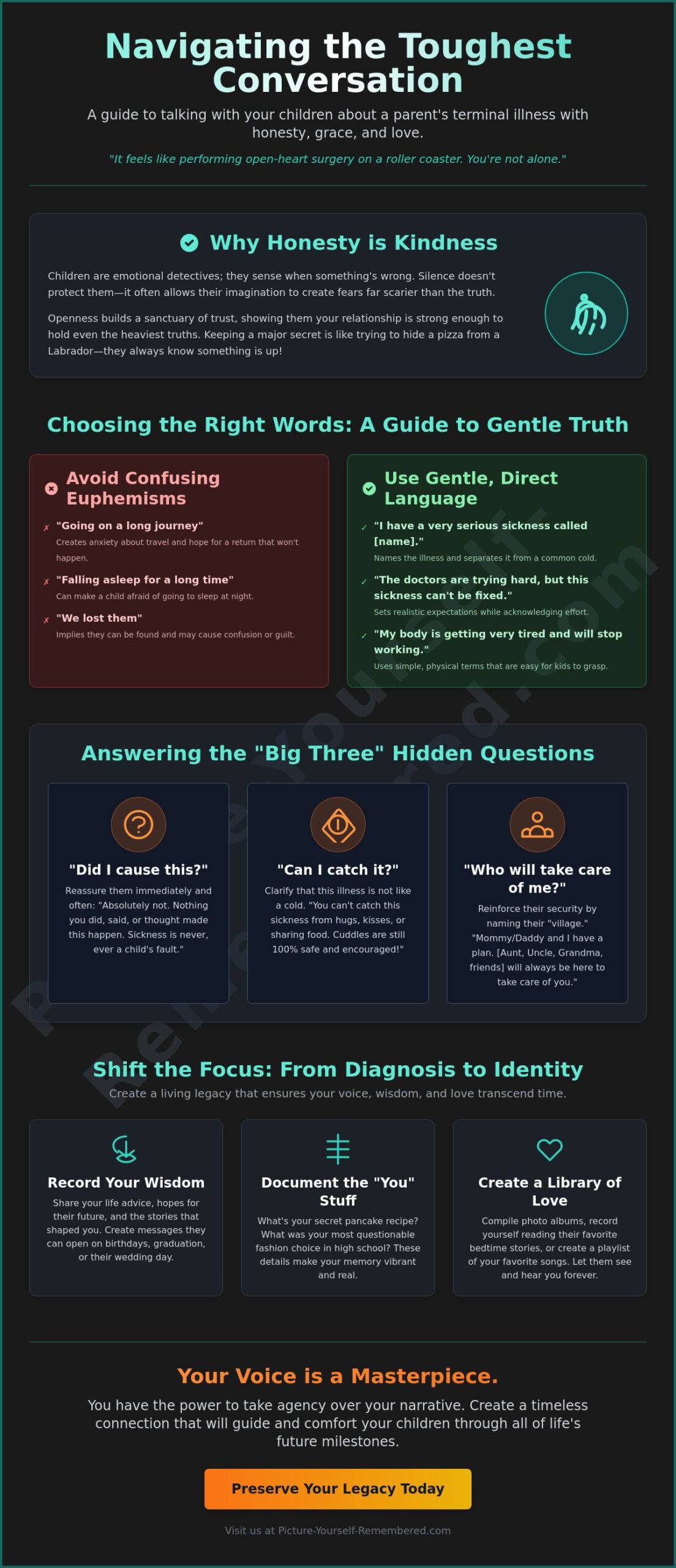
When you are figuring out how to talk to children about a parent’s terminal illness, the words you choose become the map they use to find their way through the dark. The temptation to use soft euphemisms is incredibly strong. We want to say “going on a long journey” or “falling asleep,” but these phrases often create more fear than they solve. To a child, a journey implies a return, and sleep is something they do every night. Using direct, gentle language prevents them from developing a profound phobia of the nap time you worked so hard to establish.
Researching how to talk to your child suggests that honesty builds the most resilient foundations. Children are remarkably literal. If we tell them a parent is “very sick,” we should distinguish it from the “sick” they feel when they have a cold. Explain that this is a “serious sickness” that the body cannot fix. This clarity is a form of kindness that prevents them from worrying every time someone in the house sneezes.
Toddlers and Preschoolers (Ages 2–5)
For little ones, keep your explanations rooted in the physical world. They don’t need a lecture on cellular biology; they need to know why Mommy is on the couch or why Daddy’s hair looks different. Use storybooks to illustrate the concepts of life cycles, like a leaf falling in autumn. Most importantly, repeat the details of their daily routine. Reassure them that even though things are changing, they will still have their breakfast, their favorite blanket, and a safe place to sleep.
School-Aged Children and Teens
Older children often crave biological details. They might want to know the name of the illness or how the treatment works. In Canada, for instance, an estimated 1 in 14 children will experience the death of a parent or sibling by age 18, highlighting how vital these early conversations are for long-term healing. For teens, offer agency. Ask them if they want to help with small tasks or if they’d prefer to just be a kid for a while. Their anger isn’t a rebellion; it’s a search for meaning in a situation that feels deeply unfair.
You must also address the two most common “hidden” fears: “Did I cause this?” and “Who will take care of me?” Children often believe their bad behavior or a secret mean thought triggered the illness. Look them in the eye and say clearly, “This is not because of anything you did, said, or thought.” Then, provide a specific, unwavering plan for their future care. Ultimately, how to talk to children about a parent’s terminal illness is about more than just medical facts. It’s about securing their world. You can begin preserving your voice and stories now to ensure that your guidance remains a permanent, comforting presence in their lives, no matter what the future holds.
Navigating the Emotional Storm: Security and Routine
When the winds of change blow through a home, routine serves as a sturdy anchor for a child’s nervous system. While your world might feel like it’s spinning, maintaining a predictable cadence for your children offers them a profound sense of safety. They need to know that while your health is changing, their world isn’t disappearing. It’s a delicate balance. You’re learning how to talk to children about a parent’s terminal illness while simultaneously trying to remember where you left your car keys and if the dog has been fed.
Children have a miraculous ability to process profound existential truths and then immediately ask if they can have a second popsicle for breakfast. This isn’t a sign of calloused indifference; it’s their way of seeking the familiar. To help them navigate the deeper waters, you must address the “Big Three” questions that often haunt their quiet moments with absolute clarity. First, they need to know if they caused the illness. Reassure them that no thought, word, or action of theirs made you sick. Second, they worry if they can catch it. Explain the nature of the illness simply, ensuring they know they can still hug and cuddle you safely. Finally, they need to know who will take care of them. Be specific about their future, identifying the family members or friends who will ensure their daily life continues with love.
For children who find it hard to speak their fears aloud, create a “Safe Question” box. Decorate a shoebox together and place it in a common area. They can drop in written questions or even drawings of things that worry them. This simple tool allows them to take agency over their own narrative at a pace that feels comfortable for them, turning a scary process into a shared act of love.
Maintaining the Safe Harbor
Keeping school, sports, and playdates consistent isn’t about ignoring the situation; it’s about preserving their childhood sanctuary. Reach out to teachers and coaches to share the situation. They can serve as your eyes and ears, noticing changes in behavior that might not surface at home. This “village” approach ensures that how to talk to children about a parent’s terminal illness becomes a shared language of support across all areas of their life, providing the constant presence they crave.
Handling Regression and Outbursts
Don’t be surprised if your teenager starts acting like a younger child or your preschooler becomes suddenly defiant. Grief isn’t a straight line; it’s a messy, swirling circle. Channel these “big feelings” through physical activity or art. Let them run, paint, or even scream into a pillow. If you notice persistent changes in mood or academic performance, it might be time to seek specialized pediatric grief support. Research indicates that approximately half of children who lose a parent to cancer experience unresolved grief for up to nine years later, so early intervention can be a profound gift of healing for their future selves.
Meaning-Making: Creating a Living Legacy Together
You’ve already done the hardest part by opening the door to the truth. Now, you get to decide what fills the room. When we focus on how to talk to children about a parent’s terminal illness, we often get stuck in the mechanics of the “talk” itself. But the conversation doesn’t end when the diagnosis is explained; it evolves into a shared project of memory. This is your opportunity to shift the spotlight from the patient to the person. You are more than a medical chart. You are a collector of stories, a singer of off-key lullabies, and the only person who knows exactly how much syrup belongs on a Saturday morning waffle.
One of the most profound ways to bridge the gap between now and the future is to create a video legacy. While photos are beautiful, they are silent. A video captures the cadence of your speech and the specific way your eyes light up when you’re about to tell a joke. It’s a way to ensure your wisdom stays in their pocket. Plus, it gives you a chance to leave recorded evidence that you were, in fact, the cool parent, regardless of what they might claim during their teenage years.
Collaborative projects like memory jars or shared music playlists can act as emotional bridges. Ask your children to help you pick songs that remind them of your best adventures together, even if their current taste in music makes you question your parenting choices. You might decorate a jar where everyone drops in a slip of paper describing a favorite shared moment from the week. These acts of creation transform the heavy silence of illness into a vibrant, living narrative. They allow you to practice storytelling while you are still here, ensuring your children see your life as a masterpiece rather than a tragedy.
Capturing the Everyday Magic
Think about the small, rhythmic parts of your day. Record yourself reading their favorite bedtime stories so they can still hear your voice as they drift off to sleep. Film a quick tutorial for your famous lasagna or explain the secret to fixing a leaky faucet. Your “ordinary” voice is the most precious heirloom you own. It carries the frequency of your love in a way that words on a page never quite can. These snippets of daily life become the guideposts your children will use to navigate their own futures.
Physical and Digital Heirlooms
Create a “Legacy Box” filled with handwritten letters for future milestones like graduations, first heartbreaks, or weddings. Simultaneously, look toward technology to preserve family history securely for the next century. Actionable Tip: Grab your phone and record a 30-second video today just saying “I love you.” Don’t wait for the perfect lighting or for a day when you feel “well enough.” Your children won’t care about the shadows on the wall; they will only care about the light in your voice. You can start building your digital archive today to ensure these moments are never lost.
A Voice for the Future: Ensuring Your Love Transcends Time
The conversation about a diagnosis is often the most grueling hurdle you’ll ever face. Yet, once you’ve learned how to talk to children about a parent’s terminal illness, a new horizon appears. It’s the realization that while your physical presence might change, your guidance doesn’t have to vanish. Imagine the psychological comfort your child will feel decades from now, hearing your voice on their wedding day or when they’re holding their own first child. It transforms a moment of absence into a profound act of connection. You aren’t just leaving a memory; you are leaving a companion for their future self.
Taking agency over your narrative is a powerful way to reclaim your identity from the illness. By recording messages for loved ones, you ensure that you are the one telling your story. You get to decide which life lessons are worth passing down and which embarrassing family stories deserve to be preserved for posterity. Using the Picture-Yourself-Remembered™ Scheduled Delivery System, you can set these moments to arrive 10, 20, or even 50 years into the future. It’s like being a time traveler, minus the confusing paradoxes and the risk of accidentally becoming your own grandfather.
The Power of Scheduled Messages
Think about the big adult transitions your children will face. Their 18th birthday, their college graduation, or the day they buy their first home. These are the times they’ll miss you most. A scheduled video can act as a lighthouse, guiding them through the choppy waters of adulthood. Start with a Basic Membership to secure your digital vault and begin your Video Message Storage. Knowing your story is safeguarded for the long haul provides a sense of peace that is hard to put into words. It allows you to breathe, knowing your love is already waiting for them in the future.
Taking the First Step
Signing up for a service that honors your privacy for 99 years is a practical act of devotion. Start by organizing your video recipients; think about who needs to hear your voice most. You don’t need a professional film crew or a Hollywood script. Just be you. Share your hopes, your favorite jokes, and your steady encouragement. Actionable Tip: Create a list of three future milestones for each child today. Just three. It makes the process feel manageable rather than overwhelming. Your illness is certainly a heavy chapter in your family’s history, but remember that your love is the whole book. You are the author, and you still have plenty of beautiful things to say.
Preserving Your Voice for the Generations to Come
Learning how to talk to children about a parent’s terminal illness is the first step in a much larger journey of intentional love. We’ve explored how gentle honesty creates a sanctuary of trust and how maintaining a simple routine acts as a safety net for your child’s heart. By shifting the focus from the medical details to the essence of who you are, you ensure that your story remains vibrant and alive. Think of this process as a digital time capsule that doesn’t require burying a rusty box in the backyard and immediately forgetting where you put it.
Your life is a masterpiece worth preserving with the utmost care. Founded by Stanley Poe to bridge generational gaps, our platform offers a secure digital vault for up to 99 years. With our Scheduled Delivery System, you can plan messages for every future milestone your children will reach, ensuring your wisdom is never out of reach. Secure your legacy and start your video messages with a Basic Membership today.
Take heart in knowing that your voice will always be their guide. You’re doing a brave and beautiful thing for your family, and your love will carry them forward for years to come.
Frequently Asked Questions
Should I use the word ‘dying’ with a very young child?
Yes, you should use clear language like “dying” even with very young children to avoid confusion. When learning how to talk to children about a parent’s terminal illness, it’s vital to remember that little ones are very literal. Saying someone is “going to sleep” might make them terrified of their own bedtime. By using clear, gentle words, you remove the mystery and help them understand that this is a physical change.
How do I answer if my child asks, ‘When are you going to die?’
You should answer this question with honesty based on what the doctors have shared, while acknowledging the uncertainty. If you don’t have a specific timeline, it’s okay to say, “I don’t know exactly when, but we are going to make every day count.” This approach keeps the lines of communication open. It also prevents them from feeling like you are hiding a secret deadline, though it doesn’t mean you have to skip your chores.
What if I start crying while I’m trying to tell them?
It is perfectly okay and even healthy for your children to see you cry while you are talking to them. It shows them that it is safe to feel sad and that big feelings are a natural part of loving someone deeply. If you feel completely overwhelmed, it is fine to take a break and come back to the talk later. Your tears are a testament to the beautiful bond you share.
Is it better to tell all my children at once or separately?
It is generally best to tell all your children at the same time so that no one feels left out or burdened by a secret. After the initial group talk, you can follow up with each child individually to address their specific age-related concerns. This ensures that everyone hears the same core truth while still receiving the personalized comfort they need. It also prevents the “telephone game” where siblings accidentally misinform each other.
How can I help my child remember me after I’m gone?
Helping your child remember you is about capturing the essence of your presence through legacy projects. You can create memory jars, record your favorite stories, or write letters for future milestones. Learning how to talk to children about a parent’s terminal illness involves showing them that your love is a permanent fixture. Tools like Video Message Storage allow them to see your smile and hear your laugh whenever they need a bit of comfort.
What should I do if my teen refuses to talk about the illness?
Respect your teen’s need for space while gently letting them know you are always available if they decide to talk. Teens often use withdrawal as a shield against overwhelming pain. You might suggest they write their thoughts down or use a “Safe Question” box to communicate without the pressure of a face-to-face talk. Don’t force the conversation; just be the steady, loving presence they can return to when they are ready.
How do digital video messages help a child with the grieving process?
Digital video messages provide a sense of continuity by allowing your child to receive your guidance during future life transitions. Grieving is a long journey, and hearing your voice can act as a soothing balm during difficult milestones. These messages remind them that your influence didn’t end with your diagnosis. It gives them a tangible way to feel your support during graduations, weddings, or even just a particularly hard Tuesday afternoon.
Can I schedule a message to be delivered to my child in 20 years?
Yes, you can absolutely schedule messages to be delivered to your child two decades into the future. Our Scheduled Delivery System is designed specifically to bridge these generational gaps, ensuring your words arrive exactly when they are needed most. By securing a Basic Membership, you gain access to a secure digital vault that protects your stories for up to 99 years. It’s a way to ensure your love remains an active participant in their adult life.
