
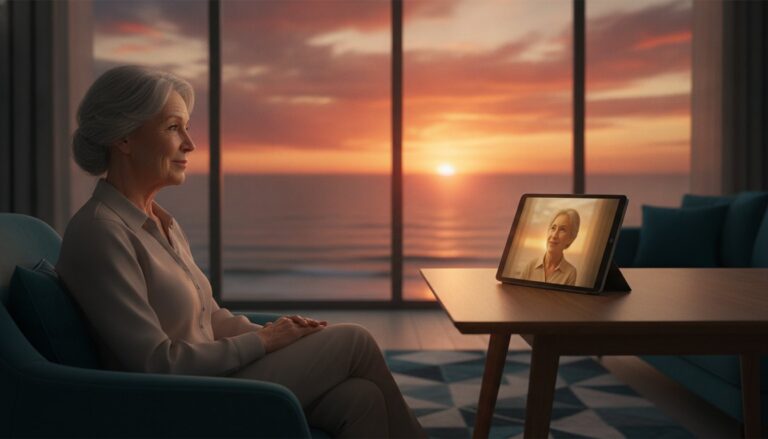
What if your great-grandchildren could sit beside you a century from now, hearing the gentle lilt of your laughter and the quiet wisdom you have gathered through the years? It is a beautiful, daunting thought to realize that your story is a masterpiece still being told. You likely feel a deep pull to share your journey, yet learning how to create a video autobiography can feel like trying to direct a Hollywood epic while you are still just figuring out where the “record” button is. It is natural to worry about looking awkward on camera or fearing that your digital legacy might simply vanish into the vast, cold void of the internet.
We understand that your life is not a file to be managed, but a gift to be preserved. In this guide, you will discover how to transform those scattered memories into a clear, soulful narrative that reflects your true identity. We will walk through a simple plan for what to say and how to capture a high-quality recording you are proud to share. Most importantly, you will find peace of mind knowing your story can be held in a secure digital vault for up to 99 years. Let’s move past the technical clutter and focus on the light of your influence, ensuring your voice remains a steady bridge to the future.
Key Takeaways
- Learn why your unique voice and presence offer a depth of connection that written journals often leave behind.
- Identify your life’s “Core Pillars” to help you choose the pivotal stories that truly represent your journey.
- Discover how to create a video autobiography using simple, natural lighting techniques that make you feel confident and comfortable on camera.
- Gain a structured plan for your message, ensuring your wisdom is organized into a beautiful, easy-to-follow narrative for your family.
- Ensure your video reaches the next century with a secure 99-year delivery system, because your legacy is far too important to be deleted by a confused grandchild looking for more phone storage.
The Essence of Memory: What is a Video Autobiography?
A video autobiography is far more than a simple recording of dates and events. It is a curated digital legacy of your voice, your values, and your unique vision for the world. When you begin to explore how to create a video autobiography, you are doing much more than documenting a timeline. You are distilling the very essence of your being into a vessel that can travel through time. This is your chance to look into the future and speak directly to those who will carry your name, offering them a glimpse of the heart behind the history.
While written journals are precious, video is the ultimate medium for “presence.” There is a specific kind of magic in the way a person’s eyes crinkle when they tell a joke or the way their hands move when they describe a passion. A letter can tell a story, but a video allows your descendants to sit in the room with you. It captures the rhythm of your speech and the warmth of your spirit in a way that ink on paper simply cannot replicate. It turns a silent memory into a living conversation.
You might worry that your life hasn’t been “grand” enough to warrant a feature-length film, but this is a common myth. Every journey holds a map for someone else. Your small victories, your quiet resilience, and even your daily routines provide the “why” behind your family’s existence. Your perspective is the only one of its kind, and that makes it invaluable. Besides, even if you think your stories are plain, your great-grandchildren will likely find your 2026 fashion choices “vintage” at best and “deeply distressing” at worst. At least give them the chance to hear the wisdom that lived beneath those questionable sweater vests.
Why Your Voice Matters More Than You Think
Hearing a loved one’s laugh provides a unique kind of psychological comfort that text alone cannot reach. It grounds a person’s identity and gives future generations a profound sense of belonging. By sharing your story, you transform raw life data into enduring wisdom. This practice is deeply rooted in the long tradition of Oral history, which has served as the foundation for human connection for centuries. Your spoken narrative is the thread that keeps your family tapestry from unraveling, ensuring that your influence remains a steady, guiding light.
A Modern Heirloom for the Digital Age
We are moving beyond the era of dusty attics and fragile polaroids that fade with the sun. In our fast-paced world, a private, intentional legacy is far more valuable than a fleeting social media post. While public platforms are often noisy and temporary, a dedicated digital vault offers a sanctuary for your most personal reflections. It is about choosing a secure, intentional home for your story rather than leaving it to the whims of a changing internet. Learning how to create a video autobiography allows you to take agency over your own narrative before it is left to others to interpret.
Actionable Tip: Before you even pick up a camera, sit in a quiet space and identify the three people you most want to “speak” to in the future. Whether it is a grandchild you haven’t met yet or a spouse you want to comfort, knowing exactly who you are talking to will make your message feel warm, intimate, and beautifully authentic.
Scripting Your Legacy: How to Plan Your Life Narrative
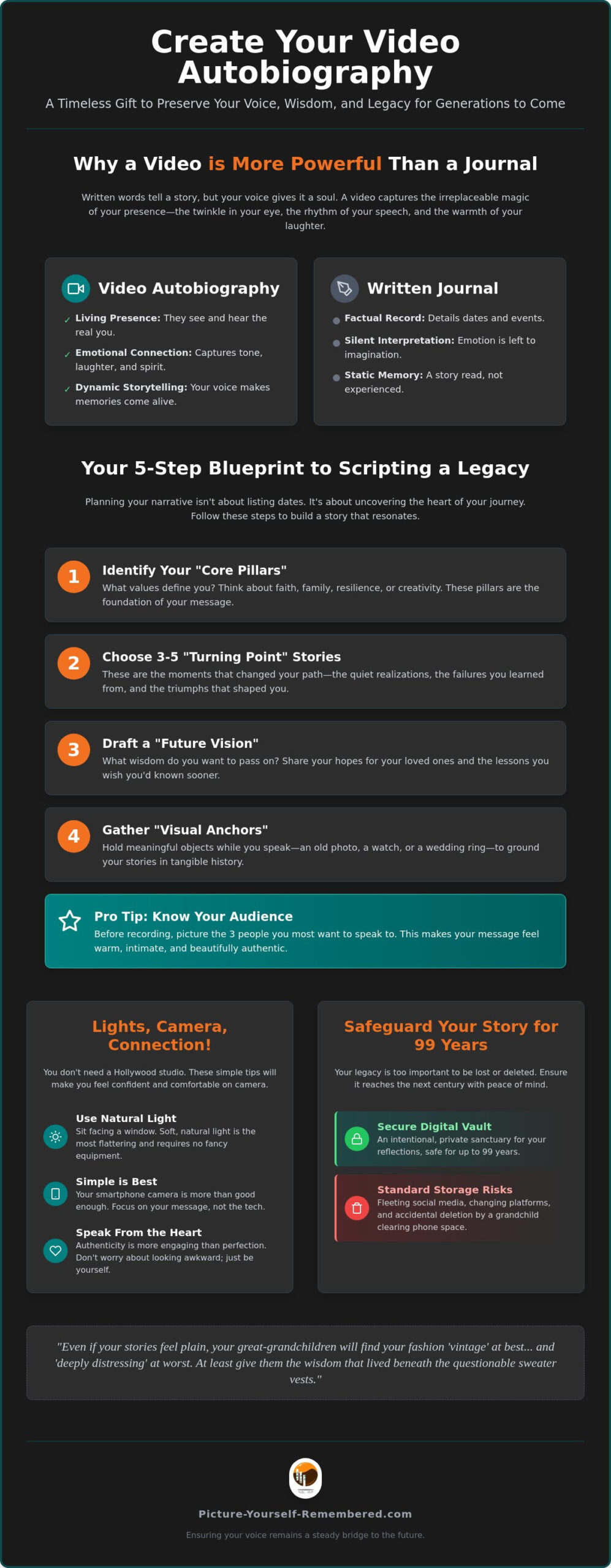
Planning your narrative is like sketching the map for a journey you’ve already taken. Most people think a biography is just a list of dates, but your grandchildren don’t need a spreadsheet; they need your heart. When you consider how to create a video autobiography, start by identifying your “Core Pillars.” These are the values that define you, such as your faith, your devotion to family, or your professional drive. These pillars act as the foundation for everything you’ll share, ensuring your message stays grounded in what truly matters.
Next, choose three to five “Turning Point” stories. These aren’t just big events like weddings; they are the moments that changed your trajectory. Think about the time you failed and got back up, or the quiet afternoon when you realized what truly mattered. To help organize these thoughts, you might consult a Step-by-Step Guide to Oral History. This resource offers professional techniques for structuring personal reflections so they remain clear and impactful for decades to come.
Draft a “Future Vision” for your loved ones. What do you want them to know about the world or about themselves in fifty years? Finally, gather “Visual Anchors.” Holding your father’s old watch or showing a faded photograph of your first home adds a tactile, visual layer to your words. It is much more engaging than just watching a talking head for twenty minutes, no matter how charming your hair looks that day. If you’re ready to start securing these memories, a Basic Membership can provide the sanctuary your stories deserve.
The “Heart-Centered” Storytelling Framework
Instead of just saying what you did, focus on how you felt. Legacy is the echoes of your character in the lives of those who follow. Use a simple structure for every anecdote: the Challenge you faced, your Response to it, and the Lesson you learned. This turns a simple anecdote into a piece of wisdom that your descendants can actually use. It moves the story from “this happened to me” to “this is why it matters for you.” It is the difference between a history lesson and a heartfelt inheritance.
Actionable Prompts to Get the Words Flowing
If you’re stuck, ask yourself: What is the bravest thing I ever did that no one knows about? Or, what does “home” mean to me in three words? These questions cut through the noise and get to the soul of your story. Learning how to create a video autobiography is a process of discovery, and these prompts help you find the gems hidden in your daily life.
Actionable Tip: Use a “memory jar” to collect small story ideas over a week before you sit down to record. Whenever a memory pops up while you’re washing dishes or driving, jot it down on a scrap of paper. By the time you’re ready to film, you’ll have a jar full of heart-centered inspiration.
Lights, Camera, Connection: Recording Your Video Message
When you sit down to record, remember that your loved ones want to see you, not a polished version of a stranger. Choosing your “Stage” is the first step in learning how to create a video autobiography that feels true. A quiet, familiar corner of your living room or a favorite chair in the garden is far better than a cold, professional studio. These spaces hold your energy and make you feel at home. They provide a backdrop of the life you’ve actually lived, which is much more precious than a generic backdrop.
To look your best without investing in expensive gear, simply follow the “Window Rule.” Position yourself so you are facing a window during the day. This allows natural light to fall softly on your face, smoothing out shadows and making your eyes sparkle. While you want to feel presentable, looking your best doesn’t mean you need to wear a tuxedo unless you really want to confuse your heirs into thinking you spent your weekends as a secret agent or a high-stakes ballroom dancer. Wear something that makes you feel like yourself.
While we often focus on the picture, your sound check is actually the most critical technical step. In the world of digital legacy, the microphone is more important than the camera lens. If the video is slightly grainy, your family will still cherish it, but if they can’t hear the cadence of your voice or the warmth in your tone, the connection is lost. Ensure the room is soft with carpets or curtains to prevent echoes, and speak at a natural, conversational volume.
Overcoming Camera Shyness
It’s natural to feel a bit stiff when that little red light starts blinking. If you feel nervous, try speaking to the lens as if it were the eyes of a dear friend sitting across from you. This simple shift in perspective changes the experience from a performance into a heartfelt conversation. We advocate for a “One-Take” philosophy. Those little stumbles, the pauses for thought, and the way you might laugh at your own mistakes make the video more authentic and lovable. For more help finding your rhythm, you can explore our guide on Recording Messages for Loved Ones.
Technical Basics for the Non-Tech Savvy
You don’t need a film crew to master how to create a video autobiography. Most modern smartphones are more than capable of capturing beautiful footage. In your settings, 1080p is a perfect balance of high quality and manageable file size. To ensure a stable shot, you don’t even need a tripod. The “book-stack tripod” hack is a classic for a reason; just stack a few sturdy hardcovers on a table until the camera is at eye level. It keeps the shot steady and prevents that “shaky camera” look that can be distracting for viewers.
Actionable Tip: Record a 30-second “test” video and play it back immediately. Listen closely for background noises you might have ignored, like a humming fridge, a ticking clock, or a distant lawnmower. It’s much better to move to a quieter room now than to realize your best stories were drowned out by a dishwasher halfway through the recording.
Structuring Your Video for Future Generations
A story without a map is just a collection of moments. When you learn how to create a video autobiography, structure is the thread that binds your memories into a coherent gift. Start your recording by setting the scene and stating your purpose clearly. Tell your viewers exactly why you are sitting in front of the camera today. A simple, “I wanted you to hear my voice and know my heart,” is more than enough to invite them into your world and give your narrative a sense of intentionality.
In the body of your message, try to balance your personal history with the wisdom you’ve earned through the years. It’s helpful to include a few “time capsule” details to ground the video in 2026. Mention the headlines of the day or the fact that everyone seems to be wearing those strange holographic sneakers this year. These small, everyday details help future generations feel the texture of the world you navigated. They make your story feel real and lived-in, rather than a distant, dusty history lesson.
Finally, consider your closing. This is your chance to offer a final blessing or a “signature” sign-off that your family will recognize as uniquely yours. It could be a favorite quote, a piece of advice you’ve always lived by, or just a simple, heartfelt “I love you.” This is the last thing they will hear in this session, so let it be a reflection of your warmest, most peaceful self.
Creating Milestone Messages
One of the most profound ways to use this medium is by speaking to the “unseen” moments. You can record a message for a wedding or a graduation that hasn’t happened yet, offering your presence to descendants you may never meet. If you are unsure of the narrative arc to follow as you learn how to create a video autobiography, you can find inspiration in our guide on how to tell your life story. It helps you bridge the gap between today and the milestones of tomorrow with grace and clarity.
The Power of the ‘Living History’ Interview
If talking to a camera feels strange, try “interviewing yourself.” Prepare a list of ten essential questions about your childhood, your greatest loves, and your hopes for the future. You can even bring family artifacts into the frame. Holding up your grandmother’s locket or your first professional award creates a “museum of you” feel that is visually engaging. It gives your words a physical anchor that your family can hold onto long after the recording ends.
Actionable Tip: Aim to keep your video between 15 and 30 minutes. This is long enough to dive deep into your soul’s journey, but short enough to be cherished and watched often. You want them to reach for this video like a favorite book, not feel like they are settling in for a three-hour lecture on why you never liked the neighbor’s cat.
Ready to secure these moments? A Basic Membership ensures your structured story is protected for the generations to come.
The Final Step: Safeguarding Your Story for 99 Years
The greatest tragedy of a beautiful story is for it to go unheard. Many people believe that simply downloading a file or saving it to a thumb drive is enough to protect their history, but digital storage is surprisingly fragile. Hardware degrades over time. In twenty years, that external hard drive will likely be nothing more than a very expensive paperweight once the connection cable is obsolete and buried in a box of things we don’t use anymore. Standard cloud storage isn’t much better; accounts can be closed due to inactivity, and passwords are easily lost across generations.
When you learn how to create a video autobiography, the final and most vital step is ensuring it actually reaches its destination. This is where the How Picture-Yourself-Remembered™ Works delivery protocol changes the story. It moves your legacy from a hopeful file to a guaranteed message. By using a system designed for endurance, you ensure that your voice doesn’t just sit on a server, but actually arrives in the inbox of a loved one exactly when it is needed most.
Scheduling Your Legacy Delivery
Our scheduled delivery system allows you to set specific dates for your messages, ranging from next month to 99 years into the future. You aren’t just storing a file; you are scheduling a future moment of connection. The security of our digital vault ensures that your private reflections remain private until the exact moment you’ve chosen. This makes a digital time capsule the safest vessel for your autobiography. It protects your voice from the erosion of time and the clutter of the modern internet, keeping your message pristine for your descendants.
Joining the Picture-Yourself-Remembered™ Community
By choosing a Basic Membership, you are taking the essential first step toward a lasting legacy. Stanley Poe founded this community in Bettsville, Ohio, with a clear vision: to bridge the generational gaps that technology often creates. We provide secure video message storage that respects the gravity of your life’s journey. We believe that your unique story is a masterpiece worth preserving with the utmost care and artistry. Mastering how to create a video autobiography is a journey of the heart, and we are here to ensure that your wisdom remains a steady, guiding presence in your family’s life for nearly a century.
Actionable Tip: Once you’ve uploaded your main story, schedule your first “Check-in” message for exactly one year from today. It can be a simple update or a few words of encouragement to your future self. This helps you get comfortable with the system and ensures you stay active in the beautiful process of documenting your journey.
Your Story is a Bridge to the Future
Your life is a masterpiece of small moments and big lessons, and now you have the tools to ensure it never fades. By focusing on your core pillars and recording with a “heart-centered” approach, you’ve moved past the fear of the camera and toward the joy of connection. You now know that learning how to create a video autobiography isn’t about being a professional filmmaker; it’s about being a grandfather, a mother, or a friend who cares enough to stay present. Plus, let’s be honest, this is your best chance to finally win that family argument about what really happened at the 1998 Thanksgiving dinner once and for all.
At Picture-Yourself-Remembered™, founded by Stanley Poe to bridge the gaps between generations, we provide a secure digital vault where your total privacy is our highest priority. Your messages are protected for up to 99 years, ensuring your voice remains a steady light for those who follow. Don’t let your wisdom become “digital dust” on an obsolete hard drive. Start your legacy today with a Basic Membership at Picture-Yourself-Remembered™. Your future family is waiting to hear from you. Your story is exactly what they will need to hear.
Common Questions About Your Legacy
How long should a video autobiography be?
Aim for 15 to 30 minutes to capture the heart of your journey without overwhelming your audience. While you might have enough stories to rival a multi-season television drama, keeping it concise ensures your loved ones can return to it often. It’s better to leave them wanting one more story than to have them checking their watches halfway through your detailed history of every car you’ve ever owned.
What equipment do I need to record my life story at home?
You likely already have everything you need right in your pocket. A modern smartphone and a quiet room with soft, natural light are more than enough to get started. You don’t need a Hollywood budget to share your heart. A simple stack of books can serve as a steady tripod; your natural surroundings will add a layer of warmth that a professional studio simply cannot replicate.
Is it better to script my video or just speak naturally?
Speaking naturally from a set of bullet points is often more moving than reading a formal script. When you learn how to create a video autobiography, your authenticity is your greatest asset. If you read from a page, you might lose that spark in your eyes that happens when you’re truly remembering. Use a few notes to keep you on track, but let your heart lead the conversation.
How do I ensure my video message is actually delivered in 50 years?
Our Scheduled Delivery System is specifically designed to handle the passage of time up to 99 years. Unlike standard cloud storage that might expire or be deleted, our protocol ensures your message stays protected in a secure digital vault until the date you’ve chosen. It’s a way to bridge the decades, ensuring your voice is heard by the very people you intended it for, even half a century from now.
Can I edit my video after I’ve uploaded it to the vault?
It’s best to finalize your video on your device before uploading it to your Video Message Storage at Picture-Yourself-Remembered™. We focus on the safe preservation and delivery of your legacy rather than editing services. Think of your upload as the final “sealing” of a time capsule. If you realize you forgot to mention your secret cookie recipe, you can always record and upload a separate message to accompany your autobiography.
What if I feel like my life isn’t ‘extraordinary’ enough for a video?
Every life is extraordinary because every journey is unique. Your descendants aren’t looking for a list of world-changing achievements; they are looking for you. They want to know your values, your laughter, and the small moments that shaped your character. Your story is a map that helps them understand their own identity and where they come from. Your perspective is a gift that only you can give.
How do I handle sensitive or difficult family topics in my autobiography?
Approach difficult topics with a focus on the wisdom gained rather than just the conflict itself. You don’t have to share every painful detail to offer a meaningful reflection. Focus on how those experiences changed you and what you hope your family learns from your resilience. It’s about transforming a difficult past into a guiding light for their future, offering them the strength you found along the way.
Is my data private and secure for the full 99 years?
Your data is protected by secure digital vault technology designed for total privacy. When you explore how to create a video autobiography with Picture-Yourself-Remembered™, you are placing your story in a sanctuary that respects the weight of your personal history. Your messages remain private and untouched until the scheduled delivery date. This gives you the peace of mind that your legacy is in safe, compassionate hands for nearly a century.
