

What if your great-grandchildren could sit down for a cup of coffee with you fifty years from now, hearing the specific rhythm of your laughter as you share your most cherished memories? Most people believe their stories will simply live on through old photos, but a voice has a way of bridging time that a silent image cannot. Learning how to create a video autobiography is not about mastering complex cinematography or acting like a Hollywood star; it’s about securing the essence of who you are for the people you love. You don’t need a film crew, and you certainly don’t need to worry if your hair isn’t doing exactly what you want it to today. Even the best directors have bad hair days, they just have the budget to hide them.
It’s completely normal to feel overwhelmed by the decades of experiences you’ve gathered or to worry that a digital file might simply vanish into the ether. We understand the weight of wanting to be remembered correctly. This guide will show you how to distill your life’s wisdom into a beautiful video narrative that will be cherished for generations. We’ll explore how to organize your thoughts, choose the right tools, and use secure video message storage to ensure your legacy is never lost. By the end, you’ll have a clear, heart-centered plan to turn your history into a lasting masterpiece of love and intentionality.
Key Takeaways
- Understand why your personal history is a masterpiece and how a video record preserves your essence far better than a dusty photo album ever could.
- Learn the step-by-step “Chapters of the Heart” framework for how to create a video autobiography, focusing on manageable 15-minute recording sessions.
- Use natural window light to instantly brighten your appearance and discover why the smartphone in your pocket is the only camera you truly need.
- Shift your mindset to a one-on-one conversation with a grandchild to keep your delivery natural, warm, and wonderfully human.
- Protect your digital legacy from being lost to time with secure video message storage; because nobody wants their life story to end up in the same digital void as those blurry vacation photos from 2008.
Why Your Story Matters: The Magic of a Video Autobiography
Think of your life as a collection of light and shadow, a masterpiece that only you have the authority to narrate. While many people are familiar with the art of autobiography through the lens of dusty books and long manuscripts, a video autobiography is something entirely different. It is a living, breathing record of your essence, your voice, and the values that have guided you through the years. It’s about capturing the sparkle in your eyes when you talk about your first car or the way your hands move when you describe your mother’s kitchen. When you learn how to create a video autobiography, you aren’t just making a movie; you’re securing a piece of your soul for the future.
Engaging in this process offers profound psychological benefits. Psychologists often refer to this as a “life review,” a healthy and reflective way to make sense of your journey. It allows you to weave together the threads of your experiences into a tapestry that feels complete. This is a moment to honor the path you’ve walked, recognizing the strength you found in hard times and the joy you discovered in the simple ones. It’s a gentle process of discovery that brings a sense of peace and preparedness to the present.
To better understand this concept, watch this helpful video:
A written memoir is a beautiful thing, but it can feel static. It lacks the warmth of a sigh or the specific cadence of a joke told by the person who lived it. Some worry that filming themselves feels like an “ego trip,” but let’s clear that up right now. This isn’t about vanity. It’s a selfless gift for the people who will one day miss you most. Think of it as leaving a light on in the window so they can always find their way back to your wisdom. Plus, if you don’t tell your story, your nephew might tell everyone you once lost a fight to a particularly aggressive goose. Let’s get the facts straight for posterity.
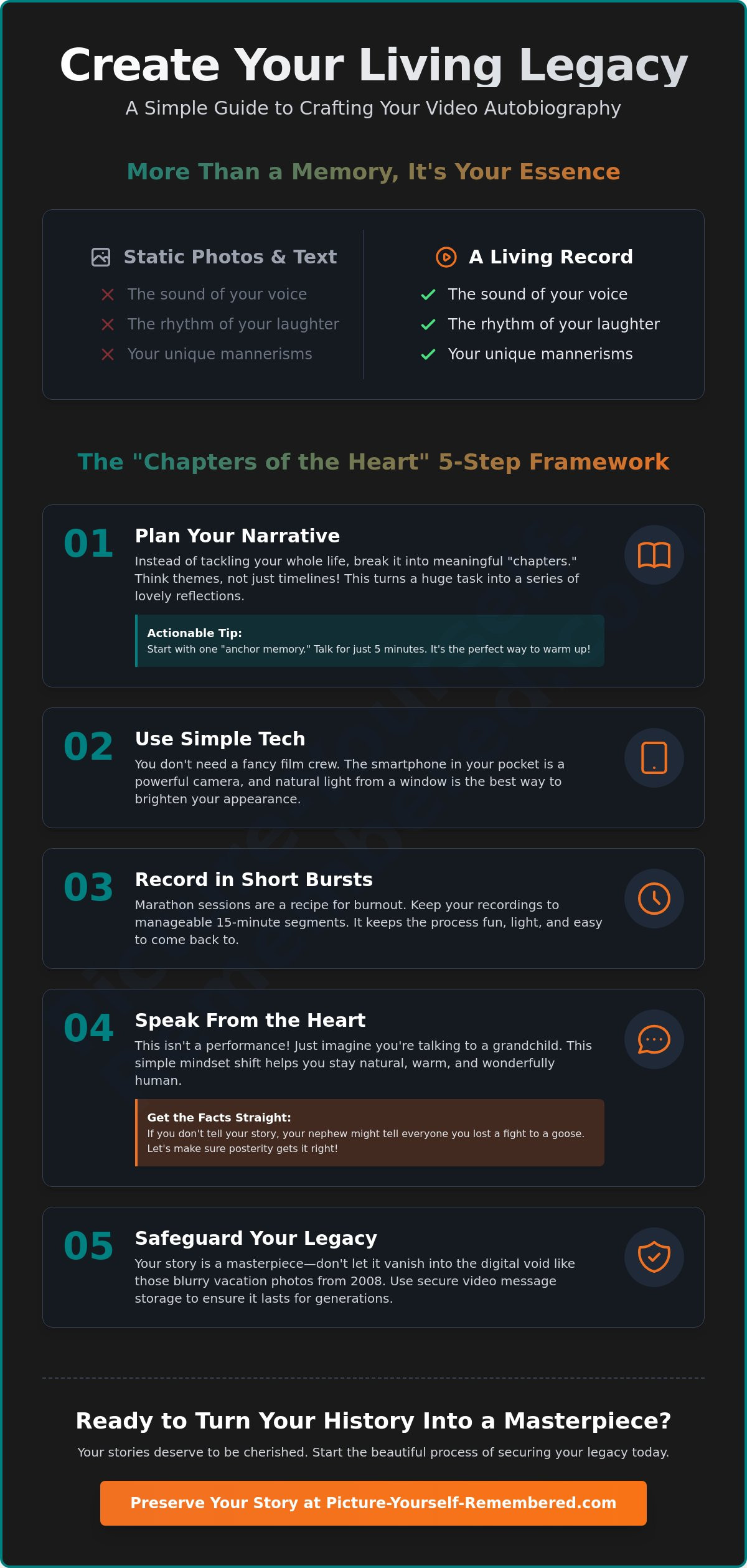
Actionable Tip: Start by choosing one “anchor memory,” a single moment that defines a lesson you’ve learned. Spend five minutes talking about just that one thing. It’s much easier than trying to summarize seventy years in your first recording.
The Power of the Human Voice
Your voice is more than just sound. It’s a unique frequency that your family will always recognize, a sonic fingerprint that carries your personality. Hearing a loved one’s laugh or the specific way they emphasize certain words is often more powerful than reading a thousand pages of text. Video captures the non-verbal wisdom found in a shrug, a smile, or a thoughtful pause. These small details are the things that make you, you. By showing your face and sharing your voice, you provide a level of comfort that text simply cannot replicate.
Bridging the Generational Gap
These videos serve as a digital “time machine” for grandchildren or great-grandchildren who may never have the chance to meet you in person. By creating a video legacy, you are practicing a profound act of intentionality. You’re ensuring that your family’s oral traditions don’t fade away into silence. It’s an opportunity to speak directly to the future, offering a hand to hold across the decades. Taking agency over your narrative today means your history remains a masterpiece worth preserving with the utmost care and artistry.
Planning Your Narrative: A Step-by-Step Framework
Approaching your history as a masterpiece requires a gentle hand and a bit of structure. Instead of viewing your life as an endless list of dates, try the “Chapters of the Heart” method. This framework allows you to break your journey into manageable segments that focus on meaning rather than just chronology. It transforms a daunting task into a series of small, beautiful acts of reflection. When you’re figuring out how to create a video autobiography, remember that you don’t need to finish the whole story in one afternoon. In fact, it’s much better if you don’t.
Actionable Tip: Aim for 15-minute thematic blocks rather than trying to record your entire life story in one sitting. This keeps your energy high and ensures your voice remains vibrant and engaged. You also have full permission to leave out that one summer in 1974; some secrets are meant to stay between you and your diary, especially if they involve questionable fashion choices or illegal pet raccoons.
To spark your memory, surround yourself with physical prompts. Hold an old photograph, feel the weight of a family heirloom, or wear a piece of jewelry with a story behind it. These objects act as anchors, pulling vivid details from the past into the present. They give your hands something to do and your eyes something to focus on, which naturally eases any camera jitters. Using a secure video message storage system can help you keep these short, meaningful clips organized as you build your collection over time.
Step 1: Selecting Your Core Themes
Guidance on choosing 3 to 5 life pillars will help you stay focused. Consider themes like “Lessons Learned from Failure,” “The Greatest Loves of My Life,” or “Hardest Challenges Overcome.” Don’t be afraid to share the messy parts of your story. While we often want to present a perfect image, your descendants will find the most strength in hearing how you navigated your struggles. If you need inspiration for what to say, our guide on recording messages for loved ones offers wonderful prompts to get your heart moving.
Step 2: Organizing Your Thoughts
I suggest staying away from a full script, as reading from a page can make you sound stiff. Instead, jot down three or four bullet points on index cards and place them just below the camera lens. Start with “The Hook,” a specific story or a surprising memory, rather than your date of birth. A thematic approach prioritizes the emotional resonance of shared experiences over a rigid timeline of events, allowing your wisdom to take center stage. This method ensures that as you learn how to create a video autobiography, the result feels like a warm, natural conversation with a dear friend.
The Simple Tech Setup: Looking and Sounding Your Best
Many people hesitate to begin because they fear the technology involved. They imagine they need a studio full of lights, expensive cameras, and a degree in sound engineering. In reality, the smartphone you already own is a powerful tool perfectly suited for this journey. When you’re learning how to create a video autobiography, the most important thing isn’t the price of your gear, but the clarity of your presence. A simple setup allows your personality to shine through without the clutter of complicated equipment getting in the way.
Actionable Tip: To look your best, find a large window and sit facing it. This natural “Window Light” is the kindest filter in existence, gently filling in shadows and giving your skin a soft, youthful glow. It can easily make you look ten years younger on camera. Just make sure the light is in front of you, not behind you. If the window is at your back, you’ll end up looking like a shadowy figure in a witness protection program, which is a bit too mysterious for a family legacy video.
Sound is just as vital as the image. We call it the “Earbud Secret.” If you have a pair of wired earbuds with a small microphone on the cord, use them. Plugging these into your phone and tucking the mic near your collar creates a crisp, professional sound that feels intimate. It’s like you’re whispering directly into the ear of a loved one. Your voice is the bridge to the future, so let’s make sure it’s heard clearly over the hum of the world. Choosing a background like a full bookshelf or a favorite armchair adds layers to your story, while a blank wall can feel a bit like a passport office.
Mastering the Environment
Before you hit record, take a moment to listen to your room. You might not notice the hum of the refrigerator or the whir of the air conditioner, but your microphone will. Turning these off for fifteen minutes creates a sacred silence that lets your words breathe. Also, pay attention to your camera height. Prop your phone up on a stack of books so the lens is at eye level. This maintains a natural “conversation” feel, ensuring you aren’t looking down at your audience or making them feel like they’re peering up your nose. Nobody needs that particular perspective of a masterpiece.
The Technical Checklist
A few practical steps will save you from frustration later. Ensure your battery is full and you have enough storage space for a few 15-minute clips. Most importantly, turn on “Do Not Disturb” mode. There’s nothing quite like a telemarketer’s call to ruin a heartfelt story about your wedding day. Always record in landscape mode, which means holding the phone horizontally. This creates a cinematic feel that fills the screen beautifully. True digital remembrance starts with a clear image and a steady hand, allowing your story to be seen and felt exactly as you intended. This simple preparation ensures that the process of how to create a video autobiography remains a joyful act of love rather than a technical chore.
Bringing Your Story to Life: Natural Performance Tips
When the little red light on your camera begins to glow, it’s natural for your posture to stiffen or your voice to change. You aren’t performing for a faceless crowd or a panel of judges. You’re simply having a conversation across time. The secret to a moving narrative is a “One-on-One” mindset. Imagine you’re sitting across from a specific person you love, perhaps a grandchild who hasn’t been born yet or a niece who always appreciates your stories. Speak directly to them. This shift in perspective turns a cold piece of technology into a warm bridge of connection. As you discover how to create a video autobiography, remember that your loved ones don’t want a polished news anchor; they want you.
Embrace the power of the pause. In our fast-paced world, we often feel the need to fill every second with sound, but silence allows your emotions to land and your audience to reflect. If a memory brings a lump to your throat, let it sit there for a moment. It’s completely okay to cry. Vulnerability is perhaps the greatest heirloom you can leave behind, as it shows the depth of your humanity and the strength of your heart. These quiet moments are often the most profound parts of your digital legacy.
Actionable Tip: If you stumble over a word or lose your train of thought, don’t stop the recording. Just smile, take a gentle breath, and repeat the sentence. These small imperfections make the video feel real and approachable. Your family will cherish the way you laugh at your own mistakes much more than a perfectly edited, robotic delivery. If you’re ready to start, you can secure your legacy with video message storage today.
Finding Your Authentic Voice
Overcoming camera shyness is easier when you treat the process as a practice in comfort. Try practicing your stories with a close friend first to find your rhythm. Wear your everyday clothes rather than a stiff suit; your favorite sweater tells a story of its own. It’s about being the most “you” version of yourself. And if your cat decided to wander into the frame mid-sentence, don’t worry. It just adds a bit of “purr-sonality” to the family history and proves that life was just as beautifully chaotic then as it will be in the future.
Engaging the Future Viewer
Use direct address to make the experience immersive for the viewer. Phrases like “I am telling you this because I want you to know how much you are loved” create an immediate emotional bond. Make sure to maintain eye contact with the lens, not the screen where your own image appears. Looking at the lens is the digital equivalent of looking someone in the eye. Finally, consider ending each segment with a “Closing Blessing” or a simple wish for the person watching. This ensures that as you learn how to create a video autobiography, your final words always leave a trail of light for those who follow in your footsteps.
Safeguarding Your Legacy: Ensuring Your Voice Reaches the Future
The greatest heartbreak of a story told is the fear that it might never be heard. We live in what many tech experts call the “Digital Dark Age,” a period where our digital footprints are incredibly fragile. A file saved on your laptop today or tucked away on a thumb drive in a drawer likely won’t be accessible in fifty years. Hardware fails, formats change, and passwords are forgotten. When you invest the time to learn how to create a video autobiography, you deserve the certainty that your masterpiece will survive the passage of time. Digital files can be as flighty as a summer breeze if they aren’t anchored in a secure harbor.
Think of your narrative as a digital time capsule that requires a sturdy, long-term vault. This is where Picture-Yourself-Remembered steps in as a guardian of your essence. Our Video Message Storage isn’t just a folder in the cloud; it’s a sanctuary designed to keep your voice clear and your image bright for decades. Beyond just keeping the files safe, our Scheduled Delivery System allows you to send specific messages to reach your loved ones at the exact moments they need them most. Imagine your voice arriving to offer a blessing at a wedding twenty years from now or sharing a joke on a milestone anniversary.
The 99-Year Commitment
Keeping a video playable over several generations requires active technical maintenance. As software evolves, files must be kept current so they don’t become digital ghosts that no modern device can recognize. A private vault offers a level of security and dignity that social media simply cannot provide. While social platforms are public billboards subject to changing terms and disappearing accounts, your private legacy belongs only to you and those you choose. You can learn more about how Picture Yourself Remembered works to bridge the gap between your present and their future. It’s much more reliable than leaving a sticky note with a password on the fridge and hoping for the best, as those tend to get lost during a deep clean or buried under a pizza coupon.
Your Next Steps
The most important thing you can do right now is to begin. Don’t wait for the perfect lighting or the perfect words; start with just one five-minute video today. There is an incredible peace of mind that comes from knowing your story is safe and sound, tucked away in a secure place where it can’t be accidentally deleted during a phone upgrade. Now that you know how to create a video autobiography, the pen is in your hand, or rather, the lens is in your sight. Take agency over your own narrative and ensure that the light of your influence continues to shine for generations to come.
Secure the Masterpiece of Your Life
Your journey is a unique tapestry of wisdom and laughter that deserves to be seen by those who follow in your footsteps. By starting with small, thematic blocks and utilizing the simple tech already in your pocket, you can transform your memories into a living bridge between generations. Learning how to create a video autobiography is not a technical challenge; it’s a profound act of intentionality that honors your personal history. It is certainly much more meaningful than leaving behind a box of mystery cables that nobody knows how to use, even if you’re certain that one of them belongs to a VCR from 1988.
Founded by Stanley Poe to safeguard family histories, Picture-Yourself-Remembered offers a compassionate, heart-centered delivery system that ensures your voice reaches the future. With secure storage for up to 99 years, your digital legacy is protected from the fragilities of modern technology. You have the power to speak directly to the hearts of your great-grandchildren, offering them a hand to hold across the decades. Begin building your timeless legacy with a Basic Membership today. Your story is a masterpiece worth preserving with the utmost care and artistry.
Frequently Asked Questions
How long should a video autobiography be?
There is no perfect length for your story, but it’s best to record in short, thematic chapters rather than one long movie. Aim for segments that last between 10 and 15 minutes. This approach makes the project manageable for you and ensures your family remains engaged. You can always add more chapters over time as new memories surface, creating a rich library of your life’s wisdom.
What if I make a mistake while recording my life story?
Imperfections are what make your video feel real and intimate. If you stumble over a word or lose your train of thought, just take a breath, smile, and keep going. Your loved ones want to see the real you, not a polished actor. If you sneeze mid-sentence, don’t worry. It just proves you weren’t a hologram created by your descendants to win a future family argument.
Is it better to hire a professional or do it myself?
Recording the video yourself often creates a deeper emotional connection than a professional production. There is a specific comfort that comes from talking directly to a lens in your own home. While professional mirrorless cameras like the Sony ZV-E1, which costs approximately $2,198, offer stunning quality, they can sometimes feel intimidating. Most people find that the authenticity of a self-recorded video carries much more weight for their family.
How do I ensure my family actually sees the video in the future?
Using a scheduled delivery system is the most reliable way to ensure your voice reaches the right people at the right time. You can set specific videos to be released on future dates, such as a child’s wedding day or a significant anniversary. This takes the burden off your loved ones to search through old files. It ensures your presence is felt exactly when it is needed most, bridging the gap between generations.
What questions should I answer in my video autobiography?
When considering how to create a video autobiography, focus on the “why” behind your choices rather than just the “what.” Ask yourself what lessons you want to pass down or what moments truly defined your character. You might discuss your greatest challenges, your most cherished loves, or the values you hope your family will carry forward. These answers provide a roadmap of your heart that your descendants can follow for years.
Do I need expensive equipment to get a good result?
You don’t need a Hollywood budget to create something beautiful. A modern smartphone is more than capable of capturing high-quality video and audio. If you want to step up your quality, a versatile camera like the Canon EOS R6 Mark II has a suggested retail price of $2,499, but it isn’t a requirement. Focus on clear audio and natural lighting first, as these elements matter far more than the price of the camera lens.
Can I include old photos and home movies in my video?
You can easily weave your physical history into your video narrative by holding up photos or heirlooms as you speak. This adds a wonderful visual layer to your storytelling and helps illustrate the people and places you are describing. Since this business does not offer professional video editing, sharing these items on camera is a simple, effective way to include them. It makes the experience feel like a personal tour through your memories.
How do I store a video so it lasts for 50 or 100 years?
Standard cloud storage or physical hard drives are often not enough for century-long preservation. Data can degrade, and hardware eventually fails or becomes obsolete. To safeguard your legacy, utilize specialized video message storage designed for long-term endurance. This type of secure vault ensures that your files are maintained and remains accessible as technology changes. It provides the peace of mind that your story will be waiting for your great-grandchildren in the distant future.
