
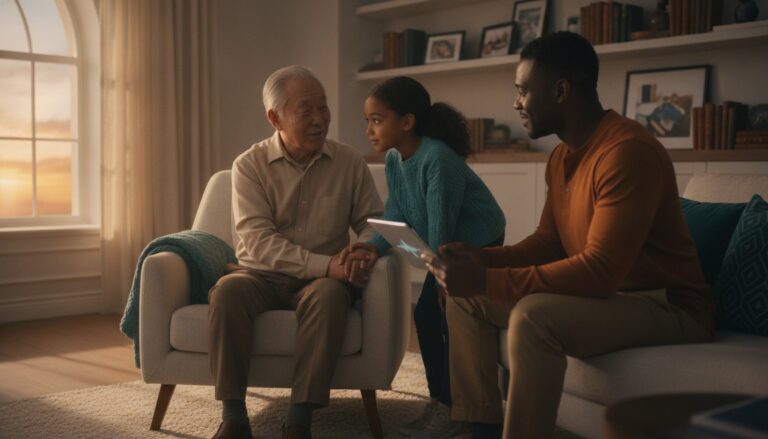
What if your great-grandchildren could sit across from you a century from now, hearing the specific cadence of your voice and the wisdom in your laughter? It’s a profound question that many of us tuck away, yet the desire to be truly remembered remains one of our deepest human longings. You probably agree that your life story is a masterpiece, but the actual process of creating a family history video can feel like trying to explain the beauty of a sunset to a spreadsheet. It’s perfectly normal to feel overwhelmed by the technology; after all, most of us are still trying to figure out why the TV remote has fifty buttons we never use.
I promise that preserving your essence doesn’t require a Hollywood production team or a confusing mountain of gadgets. This guide will help you transform those scattered memories and quiet reflections into a lasting video legacy that your family will treasure for generations. We’ll explore how to find your voice, keep your digital files safe from the “delete” button, and build a clear plan for delivering your message to the future. Your story is ready to be told, and it deserves to be preserved with the same love you put into living it.
Key Takeaways
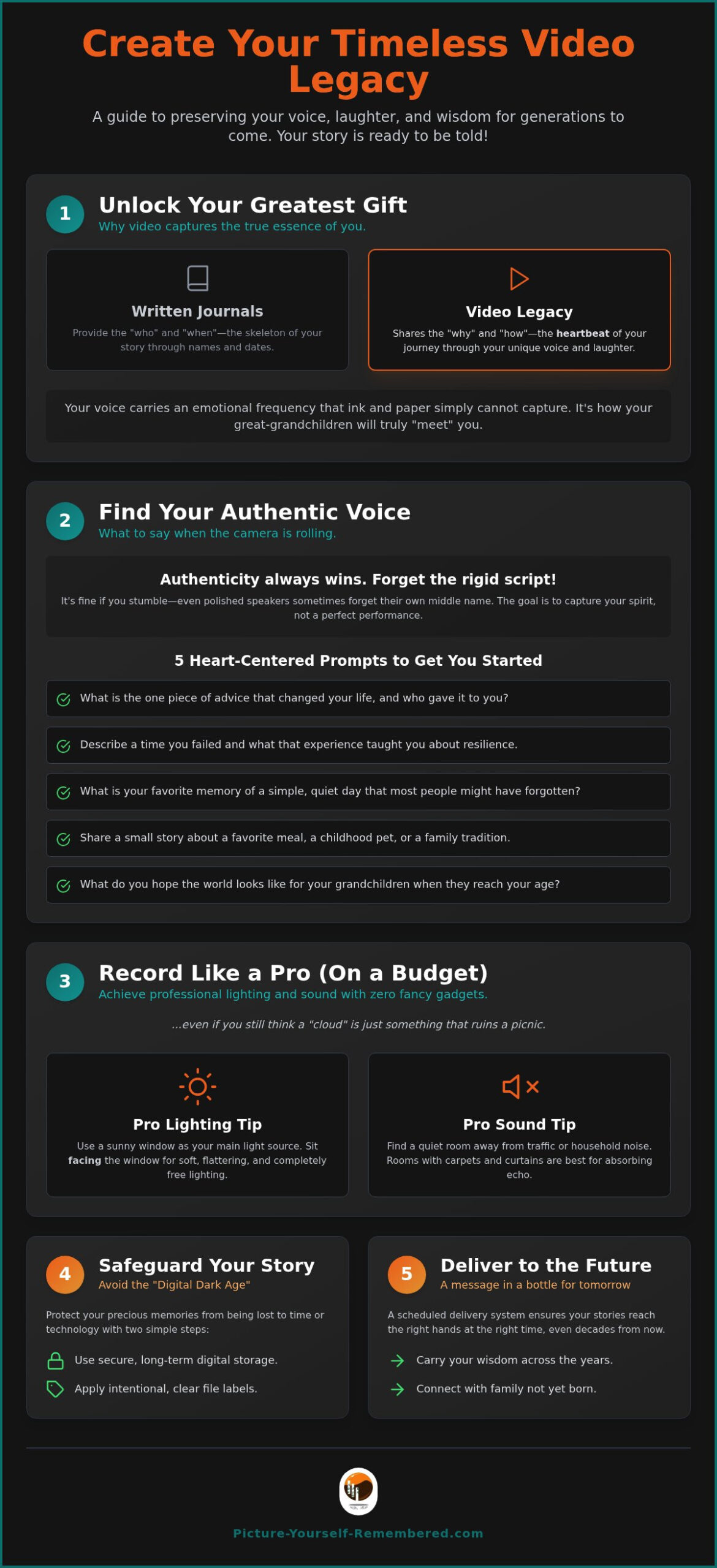
- Learn why your spoken voice and unique laughter carry an emotional weight that written journals simply cannot replicate.
- Master the “Prompt Method” for creating a family history video that feels like a natural, heartfelt conversation rather than a stiff, rehearsed script.
- Discover how to achieve professional lighting and sound using only a sunny window and a quiet room, even if you still think a “cloud” is just something that ruins a picnic.
- Understand how to protect your memories from the “Digital Dark Age” by using secure storage and intentional labeling techniques.
- Explore how a Scheduled Delivery System can carry your wisdom across decades, ensuring your story reaches the hands of those not yet born.
Why Creating a Family History Video is Your Greatest Gift
When you think about the people who shaped your life, what do you miss the most? It is rarely a list of their birth dates or a copy of their marriage license. Instead, it is the way their eyes crinkled when they laughed, the specific rhythm of their storytelling, and the warmth in their voice. By creating a family history video, you are doing something far more profound than filing a statistical report. You are bottling your essence for the people you love.
This process is a quiet act of love that bridges the generations. While a written journal is a beautiful treasure, a video allows your great-grandchildren to “meet” you in 2076, bridging a fifty-year gap with the simple press of a play button. Your voice carries an emotional frequency that ink and paper simply cannot capture. To better understand how to make these stories truly shine, watch this helpful video:
The Difference Between Genealogy and Legacy
Genealogy is the skeleton of your family story, providing the “who” and the “when” through names and dates. Legacy, however, is the heartbeat. It is the “why” and the “how” of your journey. You are the only person who can provide the missing link in your family’s history by sharing your personal perspective on the world. When you shift your focus from archiving names to preserving your unique personality, you turn a dry record into a living masterpiece.
Overcoming the “I’m Not Interesting Enough” Myth
Many people hesitate because they feel their lives haven’t been “epic” enough for the screen. Please remember that to your family, your ordinary Tuesday is extraordinary history. Let’s be honest; in fifty years, your grandkids won’t care about your professional resume, but they will definitely want to know why you thought that 2026 haircut was a good idea. Focus on small stories, like a favorite meal or a childhood pet. These threads weave a relatable life story.
Actionable Tip: Before you even touch a camera, start with your “why.” Take a moment to write down the name of one specific person you want to talk to. Whether it is a current grandchild or a future descendant you haven’t met yet, having a single face in mind will help your words flow with genuine love and intentionality.
Crafting Your Narrative: What to Say on Camera
Once you have embraced the “why” behind your project, the next hurdle is often the “what.” Sitting in front of a lens can make even the most talkative person feel like they have suddenly forgotten how to speak. When you begin creating a family history video, the goal is to capture your spirit rather than a perfect performance. It’s okay if you stumble over your words; even the most polished speakers have moments where they look at the camera and forget their own middle name. Authenticity wins every time. If you read from a rigid script, you lose the spark that makes you unique. Instead, use a loose outline of bullet points to keep your thoughts steady while allowing your genuine personality to shine through.
Physical objects can serve as beautiful anchors for your memory. Holding a worn wedding ring, a faded photograph, or even a favorite old recipe book can bridge the gap between your present self and the history you are sharing. These heirlooms act as “story starters,” giving your hands something to do while your heart finds the right words. When you are ready to protect these recorded moments, consider exploring a secure digital vault for your peace of mind.
5 Heart-Centered Prompts for Your Video
- What is the one piece of advice that changed your life, and who gave it to you?
- Describe a time you failed and what that experience taught you about resilience and starting over.
- What do you hope the world looks like for your grandchildren when they reach your age?
- Realize that preserving family history starts with a single story, told with honesty and love.
- What is your favorite memory of a simple, quiet day that most people might have forgotten?
Structuring Your Video for Maximum Impact
A simple “Past, Present, Future” framework works wonders for a 15-minute video. Spend the first five minutes on your childhood and the lessons your ancestors taught you. Use the middle five minutes to discuss your current values and what brings you joy today. Finally, dedicate the last five minutes to your hopes for the viewer. Address your audience directly, using names like “To my future granddaughter,” to create an immediate connection. Imagine you are sharing a cup of tea with the viewer. This isn’t a lecture; it’s an invitation into your world.
Actionable Tip: Choose 3-5 key life lessons you want to pass down as the core of your video. Write these down on a small card and place it just below the camera lens. This ensures that even if you get sidetracked by a funny memory, you can always find your way back to the wisdom you most want to share.
Recording Like a Pro Without the Professional Price Tag
You might think you need a director’s chair and a professional lighting rig to begin creating a family history video, but that couldn’t be further from the truth. In fact, the most moving legacy videos are often those that feel the most human. You don’t need a Hollywood budget to capture a masterpiece; you simply need a few intentional choices that allow your presence to shine through clearly. When the technical hurdles are low, your heart has more room to speak.
The first step to a beautiful video is finding your light. You don’t need expensive lamps when you have the sun. Simply find a large window and sit facing it so the natural light washes over your face. This soft, even glow is incredibly flattering and makes your eyes sparkle with life. Next, focus on your sound. While people will forgive a slightly grainy picture, they’ll struggle to connect if they can’t hear your words. You don’t need a fancy microphone; just find the quietest room in your home. Turn off the dishwasher, silence your phone, and perhaps even pause the humming refrigerator for a few minutes while you speak.
Stability is your third priority. A shaky camera can be distracting, but you don’t need a high-tech tripod. A sturdy stack of books on a kitchen table works perfectly to keep your camera still. Finally, embrace the “One-Take” philosophy. Don’t worry about being perfect. If you stumble over a word or let out a genuine laugh at a memory, keep recording. These little imperfections are exactly what your family will love the most. They make the video feel real, raw, and deeply personal.
Simple Tech Setup for Beginners
Your smartphone is likely the only camera you will ever need for creating a family history video. These devices are designed to capture high-quality imagery with very little effort. The most important rule is to keep the camera at eye level. If the camera is too low, you risk the dreaded “nostril view,” and let’s be honest, nobody wants to remember you from that specific angle, no matter how much they love you. Prop your phone up so you are looking directly into the lens as if you were looking into the eyes of a dear friend.
Managing Your Recording Environment
Before you press record, take a moment to look at what is behind you. Choose a setting that reflects who you are, whether it’s your favorite armchair or a bookshelf filled with the stories you love. Be mindful of background noise like ticking clocks or pets that might want to join the conversation. For more detailed advice on these technical basics, feel free to explore our guide on recording messages for loved ones. Your environment should feel like a safe harbor where your story can naturally unfold.
Organizing and Preserving Your Family Memories
Once you have finished the beautiful work of creating a family history video, a new challenge begins. You must ensure that your story doesn’t simply vanish into the digital ether. We are currently living in what historians call the “Digital Dark Age,” a time when our most precious memories are often stored on fragile hardware that wasn’t built to last a century. Hard drives can fail, and USB sticks have a mysterious way of disappearing into the same void as single socks and retired television remotes. To truly honor your journey, you need a preservation plan that is as intentional as the stories you’ve shared.
Organization is the key to endurance. A file named “Video_123.mp4” tells a future grandchild nothing about the treasure inside. Take the time to label your files with specific names, dates, and a brief bit of context. Adding this metadata ensures that even decades from now, your descendants can search for “Grandma Sarah’s advice on resilience” and find it instantly. If you want to ensure your files are protected by more than just a hope and a prayer, consider starting a Basic Membership to secure your video message storage today.
The Problem with Standard Cloud Storage
Many people assume that posting a video to social media or a standard cloud drive is enough. However, these platforms aren’t designed for multi-generational legacy. Terms of service change, platforms go bankrupt, and privacy settings can be incredibly fickle. There is also the “Password Problem.” If your memories are locked behind a password that is just your first pet’s name plus the year you finally gave up on learning the accordion, your family might never find the key. Learn more about how to create a video legacy that bypasses these technical hurdles and stays accessible to those who need it most.
Digitizing Physical Elements
You can breathe new life into old family albums by combining them with your new recordings. Use your phone to “film” old physical photographs while you provide a voiceover explaining who the people are and why that moment mattered. This creates a “Living History” where your modern voice guides the viewer through the landscapes of the past. It turns a silent image into a shared conversation, bridging the gap between what was and what is yet to come.
Actionable Tip: Don’t wait for the perfect moment to get organized. Create a “Legacy Folder” on your computer desktop today. Start moving your most important video clips, scanned photos, and notes there immediately. Having one central sanctuary for your story makes the final steps of creating a family history video much easier to manage.
Ensuring Your Story Reaches the Future
You have done the heart-work of creating a family history video, and you have organized your files with care. Now, we arrive at the most vital question: how do you ensure this message actually reaches your loved ones decades from now? Many people assume their children will simply find a folder on a laptop, but life is busy and technology changes fast. Without a clear plan for delivery, even the most beautiful stories can remain locked away, unheard and unseen. You deserve the peace of mind that comes with knowing your voice will be heard exactly when it is needed most.
This is where the Scheduled Delivery System becomes your most trusted ally. Instead of leaving the future to chance, you can choose specific moments for your messages to arrive. Imagine a grandchild who hasn’t even been born yet receiving a video from you on their twenty-first birthday. Our 99-year delivery protocols are designed to bridge these vast generational gaps, turning a digital file into a timeless inheritance. Let’s be honest, most of us struggle to remember where we put our glasses while they are sitting on top of our heads, so expecting a family member to manage a digital file for fifty years is a big ask. By automating the process, you remove the burden from your family and ensure your legacy is secure.
The Value of a Basic Membership
A Basic Membership serves as the essential starting point for your journey into the future. While a standard email account might be deleted after a period of inactivity, a secure digital vault is built for endurance. It is a dedicated sanctuary for your memories, protected by high-level security to keep your heartfelt messages private until the moment they are meant to be shared. Securing your spot in the future today is a simple act of intentionality that protects your story from the shifting tides of technology. It is about more than just Video Message Storage; it is about honoring the life you have lived.
The Peace of Mind of a Planned Delivery
There is a unique emotional power in a planned delivery. Receiving a “surprise” message from a loved one at a milestone moment, like a wedding day or a first home purchase, is a gift beyond measure. It reminds your family that you are still walking alongside them, offering wisdom and love across the years. Your story is a masterpiece, and creating a family history video is only half the journey. Don’t leave the final delivery to chance; instead, choose to be a visionary mentor for the generations to come.
Actionable Tip: Take a moment today to look at your calendar and think of a future milestone. Set a delivery date for your first video message. Whether it is a graduation ten years away or a wedding day decades in the future, picking a date makes your legacy feel real and tangible.
Your Voice is the Bridge to Tomorrow
The journey of creating a family history video is a profound act of intentionality that transforms your memories into a living masterpiece. We have explored how simple tools, like the phone in your pocket and the sunlight in your window, are all you need to capture your unique essence. You now know that your authenticity matters far more than a perfect script; your family wants to see the real you, laughter and all. Even if your future grandkids wonder why you were using a handheld device instead of a holographic projector, your words will remain their most precious inheritance.
Your story deserves a sanctuary that can withstand the test of time. With compassionate support for your storytelling journey, we offer a secure 99-year digital vault and a Scheduled Delivery System designed for future generations. You can begin your legacy today with a Basic Membership at Picture-Yourself-Remembered™ to ensure your wisdom reaches the hearts of those you love. Take that first step with confidence. Your presence is a gift that the future is waiting to receive.
Frequently Asked Questions
How long should a family history video be?
A thoughtful family history video is usually best kept between 10 and 15 minutes per segment. This duration allows you to share deep wisdom without losing the viewer’s attention. If you feel you have much more to say, consider recording a series of shorter “chapters” instead of one long marathon. This approach makes your legacy feel like a collection of warm, manageable visits.
Do I need a professional camera to create a quality video?
You definitely don’t need professional equipment to capture a beautiful legacy. Your current smartphone has more than enough power to record high-quality video that will look great for years. The heart of the project is your presence and your truth, not the brand of your lens. Focus on finding a quiet room and a sunny window to ensure you look and sound your best.
What if I am too shy to be on camera?
You can still share your story effectively by focusing the camera on cherished objects while you speak. Hearing your voice provides a deep emotional connection even if you aren’t visible on screen. If you’re feeling especially camera-shy, just pretend you’re telling a story to a very attentive houseplant. They are excellent listeners and never point out when you have a bit of spinach in your teeth.
Where is the safest place to store my video for 50 years?
The safest place for your legacy is a secure digital vault specifically designed for long-term storage. Unlike a standard hard drive that might fail or a cloud account that could be deleted, a dedicated vault uses protocols to keep files safe for up to 99 years. This specialized Video Message Storage protects your memories from being lost to broken hardware or forgotten passwords. It provides a permanent home for your story.
Can I add music or old photos to my family history video?
You can absolutely include music and photographs to add depth to your narrative. When creating a family history video, holding up an old photo or playing a soft, meaningful song in the background can spark vivid memories. Just make sure the music is quiet enough that it doesn’t compete with your voice. These extra layers turn a simple recording into a rich, multi-sensory experience for your descendants to enjoy.
How do I make sure my family knows the video exists?
Using a Scheduled Delivery System is the most effective way to ensure your family discovers your message. You can set a specific future date for the video to be sent directly to their email address. This automation means you don’t have to worry about them finding a hidden USB drive in a dusty shoebox. It guarantees that your wisdom arrives exactly when you intended it to be heard.
What happens to my videos if the technology changes in the future?
Legacy storage providers use active management to ensure your videos remain compatible with future technology. As file formats evolve, your content is updated to ensure it stays viewable on the devices of the future. This protection prevents your story from becoming trapped in an obsolete format. It’s the digital equivalent of making sure your old home movies don’t get stuck on a VHS tape with no player.
Can I record a video message for a child who is still a baby?
Recording a message for a baby is a wonderful way to begin creating a family history video legacy. You can speak to them about your life today and share the dreams you have for their future. By scheduling the delivery for their 18th or 21st birthday, you give them a priceless gift from the past. It allows them to feel your love during a major milestone in their adult life.
