

What if the “five stages” first introduced by Elisabeth Kübler-Ross in 1969 aren’t a linear map at all, but more like a messy, beautiful, and completely unpredictable playlist that someone else keeps hitting shuffle on? Most of us feel a heavy pressure to “get through” the grieving process as if it’s a chore list we can check off by Friday. You aren’t failing just because your emotions feel like a browser with 52 tabs open and you can’t find where the music is coming from. It’s completely normal to feel like you’re wandering through a fog one day and standing in bright sunlight the next.
We understand that the fear of losing the essence of a loved one, like the specific grain of their voice or the way they told a certain story, can feel just as heavy as the loss itself. This guide offers a gentle, non-linear approach to your healing journey that honors your unique narrative while helping you preserve the most important connections in your life. We’ll explore four practical ways to practice stewardship over your memories and find a sense of quiet dignity as you step toward a peaceful future.
Key Takeaways
- Learn why the grieving process is more like a winding path than a straight line, helping you find peace in your own unique emotional rhythm.
- Discover why the five stages of grief are a helpful guide rather than a strict map, giving you permission to skip, revisit, or stay a while in any stage.
- Master small, intentional actions you can take today to honor your loved one’s essence while gently managing the weight of your loss.
- Explore the concept of “scheduled comfort” and how hearing a familiar voice can act as a vital bridge during your most difficult moments.
- Debunk the myth that grief has an end date, because love is eternal—and if you find yourself talking to a photograph, just know that’s a perfectly valid form of “checking in.”
What is the Grieving Process? Understanding the Heart’s Journey
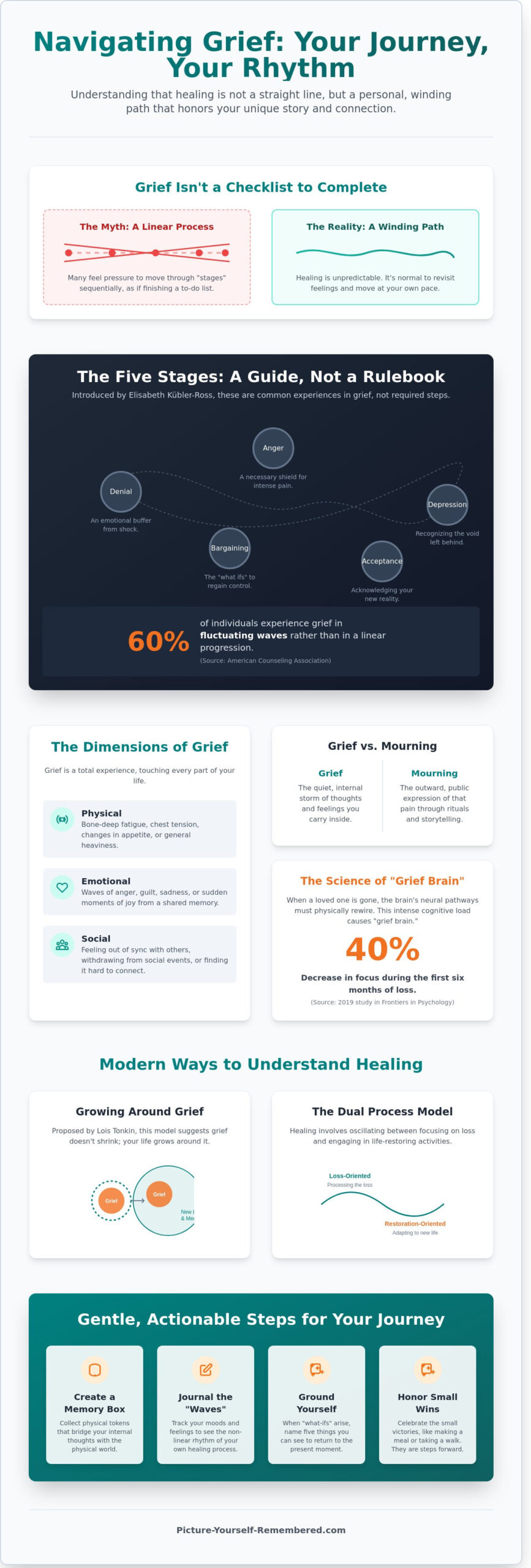
The grieving process isn’t a medical condition to be cured; it’s the natural, multifaceted response to losing someone who held a piece of your heart. It touches every corner of your life, from the way your body feels heavy in the morning to the way you interact with friends at dinner. There’s no “correct” way to navigate this journey. Your path is as unique as your thumbprint. This is a space for you to breathe and reflect on your own story, away from clinical labels and rigid timelines. While some find solace in quiet reflection, others need to stay busy. Both are valid. We must acknowledge that bereavement isn’t just a feeling; it’s a total transformation of your reality. It involves the stewardship of your memories and the essence of your shared bond. To help you understand the weight you’re carrying, consider these dimensions of the experience:
- Physical: Feeling bone-deep fatigue, tension in the chest, or sudden changes in appetite.
- Emotional: Waves of anger, guilt, or even sudden joy when remembering a shared joke.
- Social: Feeling out of sync with friends or needing to withdraw from typical social circles.
The Difference Between Grief and Mourning
Grief is the quiet, internal storm you carry inside; mourning is the outward expression of that pain through rituals and storytelling. Cultural narratives often dictate how we “should” mourn, but your personal rituals matter just as much. Honoring both the internal ache and the external ceremony is essential for moving toward a sense of peace. Actionable tip: Create a “memory box” with physical tokens like theater tickets or handwritten notes to bridge your internal thoughts with the physical world.
Why It Feels So Heavy: The Science of Connection
Your brain builds routines around loved ones. When they’re gone, neural pathways must physically rewire to account for that absence, causing “grief brain.” It’s like having 47 browser tabs open, all playing different music, while you’re just trying to remember if you fed the cat. A 2019 study in Frontiers in Psychology found this cognitive load can decrease focus by 40 percent during the first six months of loss. Understanding the grieving process helps you see this heaviness as a reflection of your deep connection and the beautiful narrative you built together.
The Famous Five Stages—and Why They Are Not a Checklist
Since Elisabeth Kübler-Ross introduced her model in 1969, many have treated these steps like a grocery list. One person might check off denial, move to anger, and eventually cross off acceptance. The reality of the grieving process is much more like a tangled ball of yarn. You might feel a sense of peace on Tuesday and find yourself back in deep anger by Friday afternoon. It’s a messy, rhythmic journey that lacks a finish line. Think of it as a stormy sea rather than a paved road. Data from the American Counseling Association indicates that roughly 60% of individuals experience grief in fluctuating waves rather than linear stages.
Bargaining is your heart’s natural attempt to regain control when you feel completely helpless against the weight of loss.
Breaking Down the Stages with Compassion
Denial and anger act as emotional buffers. They shield your essence from the initial shock. When the “what ifs” arrive, you’ve entered bargaining. This is the quiet negotiation with the universe to change the narrative. Depression is the heavy, silent recognition of the void left behind. Acceptance isn’t a destination where the sun always shines; it’s a quiet, courageous acknowledgment that your world has changed its shape.
Modern Models: Growing Around Your Grief
Lois Tonkin proposed a beautiful idea in 1996 called “Growing Around Grief.” She argued that your sorrow doesn’t actually shrink over the years. Instead, your life expands. You build new memories until the grief is just one part of a larger, vibrant landscape. The Dual Process Model, created in 1999, describes how we oscillate between loss and restoration. Grief is a lot like a cat; it shows up unannounced, demands your full attention, and refuses to leave just because you have a Zoom call.
- Journal the “Waves”: Track your moods for 14 days to see the rhythm of your healing.
- Limit the “What-Ifs”: When bargaining starts, ground yourself by naming five things you can see right now.
- Honor the Small Wins: Celebrate the days you managed to cook a meal or go for a walk.
By understanding the grieving process as an unfolding narrative, you give yourself permission to heal at your own pace. If you’re looking for a way to honor the story that remains, you might consider how to cherish your legacy through intentional storytelling.
Common Myths: What the Grieving Process Actually Looks Like
Grief isn’t a straight line or a tidy checklist. It’s a bit like a junk drawer; you never know if you’re going to find a cherished memory or a literal battery that leaked in 1994. Society often tells us we should be “over it” by a certain date, perhaps after the first year passes. The reality is that love has no expiration date. You don’t stop loving someone just because they’ve transitioned from your sight, so the grieving process naturally continues as you learn to carry their essence in a new way.
Another common misconception is that if you aren’t crying, you aren’t truly sad. Grief is a master of disguise. It shows up in heavy silence, sudden bursts of humor, or even a frantic need to stay busy. Don’t judge your heart by the dryness of your eyes. Looking ahead to the future isn’t “giving up” on the person you lost. In fact, a 2022 survey by the Grief Recovery Institute found that 68% of people felt guilty for feeling happy again. Choosing to live fully is the highest form of stewardship for the legacy they left behind.
The Physical Symptoms People Rarely Mention
Your body feels the weight of loss just as much as your soul does. You might experience intense fatigue, changes in your appetite, or even “phantom” sounds, like the familiar jingle of their keys. A study published in 2021 in the journal Frontiers in Psychology noted that 50% of grieving adults report significant physical exhaustion. Your body needs gentle care during this time. Actionable tip: Drink at least 8 glasses of water a day. Crying is dehydrating work, and staying hydrated helps clear the “brain fog” that often accompanies deep loss.
Navigating ‘Grief Triggers’ and Anniversaries
The “firsts” are often the most daunting milestones to cross. Whether it’s a birthday, a holiday, or a specific date on the calendar, these moments can bring the grieving process back to the forefront with surprising intensity. A specific scent of lavender or a 1980s pop song can act as a sudden trigger. To manage these waves, try these steps:
- Plan ahead: Decide where you want to be and who you want to be with 2 weeks before a major anniversary.
- Create a bridge: Start a new tradition that honors the past while embracing the future, like planting a tree or donating to a cause they loved.
- Give yourself grace: If you need to cancel plans at the last minute because the weight feels too heavy, that’s okay.
By preparing for these triggers, you take agency over your narrative. You aren’t just moving on; you’re moving forward with them as a part of your story.
Actionable Steps to Navigate Your Journey of Remembrance
The grieving process often feels like wandering through a thick fog where the landmarks keep shifting. To find your way, focus on small, intentional acts rather than trying to map out the entire future at once. Stewardship of memory is the active choice to preserve a loved one’s stories for future generations. By taking tiny steps today, you ensure their essence remains a vibrant part of your family’s narrative. Honestly, some days you’ll handle it all with grace, and other days you’ll find yourself weeping because you saw a specific brand of discount laundry detergent in aisle four. That’s just part of the ride.
Daily Practices for Emotional Clarity
Managing the immediate emotional weight requires a gentle touch. Try these three simple habits to keep your head above water:
- Journaling: Spend 12 minutes each morning writing a letter to the person you lost. Tell them about your day or share a secret you never got to tell them; it helps close the loops of the “unsaid.”
- Boundaries: Give yourself permission to say no to social invites. If a 2024 dinner party feels like an emotional marathon you aren’t ready for, stay home with a book instead.
- Mindfulness: When the past feels heavy, ground yourself in the now. Focus on the physical sensation of your feet on the floor or the temperature of the air in the room.
Creating a Living Legacy
Once the initial fog begins to lift, you can start looking toward the “later” by building a bridge between generations. This transition from mourning to legacy-building is a powerful part of the grieving process. Finding meaningful ways to remember a loved one can transform the pain of loss into something beautiful and enduring.
- Gathering stories: Host a small gathering to record an oral history. Ask relatives about specific dates, like what the weather was like on a wedding day in 1978 or the name of a first pet.
- Digital Heirlooms: Don’t let your memories sit on a fragile hard drive. Organize photos and videos into a secure digital vault where they can be accessed by grandchildren decades from now. Learning about digital remembrance and preserving your essence for future generations can help ensure your family’s stories survive for the next century.
You might even want to learn how to interview a family member for their life story to capture the nuance of their voice and spirit before those details fade. Taking these steps provides a sense of quiet dignity to your healing. If you are ready to begin this journey of preservation, you can explore our legacy planning resources to start securing your family narrative today.
How a Lasting Voice Helps Ease the Burden of Loss
Imagine the quiet of a Sunday afternoon three years from now. The initial sharp edges of the grieving process have softened, but you still find yourself longing for a specific piece of advice or the unique cadence of a loved one’s laugh. Scheduled comfort allows that wish to become a reality. By receiving a pre-recorded message at a predetermined time, those left behind aren’t just looking at a static photo; they’re engaging with a living narrative. It acts as a bridge, spanning the gap between what was and what will be. Think of it as a digital time capsule with a heartbeat that continues to pulse for the future.
The Gift of a Future Message
A wedding day in 2035 or a graduation in 2042 can feel bittersweet when a seat is empty. Receiving a personalized video message on these milestones transforms that absence into a celebration of presence. Our secure digital vaults archive these precious narratives for 99 years, ensuring your great-grandchildren can hear your story directly from you. Starting with a Basic Membership is a practical first step. It costs less than a single dinner out and secures your family’s history before the fine details begin to fade. It’s a much better way to be remembered than as a box of blurry Polaroids that nobody can identify.
Taking Agency Over Your Own Story
You don’t need a film crew or a Hollywood budget to capture your essence. You can use your phone to record your favorite recipes, your best advice, or simply your hopes for your children. To start, choose one specific memory from your childhood and spend three minutes describing how it felt. This simple act creates an immediate emotional anchor. Our scheduled delivery system handles the logistics, so you can focus on being yourself. Recording these moments provides a profound sense of peace of mind today, knowing your voice will be there when it’s needed most during the grieving process of those you love. It’s about stewardship of your own life story. Begin your journey of legacy and peace of mind today.
Honoring the Narrative of Your Heart
The road through loss is rarely a straight line. It’s more like a winding path through a thick forest where the sun peeks through at unexpected moments. You now understand that the grieving process doesn’t follow a strict schedule. It’s a unique journey that honors your specific bond. By embracing the five stages as fluid experiences rather than a rigid to-do list, you give yourself the grace to heal naturally.
Let’s be honest; grief can feel as messy as a kitchen junk drawer, but finding a way to organize your memories brings a quiet sense of peace. Stanley Poe founded Picture Yourself Remembered to bridge the gap between generations, ensuring your essence is never lost to time. Our digital vault secures your most cherished narratives for up to 99 years. The interface is simple enough for a tech-savvy teen or a grandparent who still thinks the cloud is just a weather forecast. You can take stewardship of your life story and transform it into a masterpiece of love today.
Secure your legacy and provide comfort for the future with a Basic Membership
Your story is a gift that deserves to be unwrapped by those who follow in your footsteps.
Frequently Asked Questions
How long does the grieving process typically last?
The grieving process has no fixed expiration date, but clinical experts at Columbia University suggest that acute symptoms typically begin to integrate into a new normal within 6 to 12 months. Healing is a unique narrative rather than a race. You might find that the heavy fog lifts after 365 days, yet certain milestones still evoke a quiet reflection on their essence. Be patient with your heart while it finds its rhythm again.
What are the most common emotional symptoms of grief?
Common emotional symptoms include deep yearning, numbness, and sudden irritability, which affect nearly 100% of people during bereavement. You may feel a deep void or a sudden surge of joy followed by guilt. It’s like a messy art project where the colors don’t always match. To manage these waves, try journaling for 10 minutes every morning to capture your internal narrative and honor your feelings.
Is it normal to feel angry at the person who passed away?
Anger is a completely normal response, with approximately 20% of grieving individuals reporting feelings of frustration toward the person who passed. You aren’t a villain for feeling abandoned or left behind. It’s actually a testament to the strength of your connection. During the grieving process, try writing a “no-filter” letter to them to release those fiery emotions safely onto the page without judgment.
Can children go through the same stages of grief as adults?
Children process grief in short, intense bursts rather than the prolonged periods seen in adults. A 7 year old might cry for 5 minutes and then immediately ask for a grilled cheese sandwich. Their grief is intermittent and often physical. You can support them by creating a “memory box” with 5 specific items that represent their loved one’s cherished essence and lasting impact.
What is ‘complicated grief’ and when should I seek professional help?
Complicated grief is a condition where the pain remains at a peak intensity for more than 12 months after the loss. If you find yourself unable to function at work or home after 365 days, it’s time to talk to a therapist. Seeking stewardship for your mental health is a brave act of self-love. Think of it as hiring a professional navigator for a very foggy sea.
How can I support a friend who is going through the grieving process?
Supporting a friend is most effective when you provide concrete actions, such as delivering a meal on a Tuesday or running 2 specific errands. Research shows that social support reduces the risk of isolation in 75% of grieving adults. Don’t ask what they need; just show up with a coffee or a listening ear. Your presence is a gift, even if you just sit in silence together.
Can hearing a loved one’s voice through a video message actually help with grief?
Hearing a familiar voice can be incredibly healing because it stimulates the auditory cortex and fosters a sense of continued bond. A 2021 study in the Journal of Loss and Trauma suggests that sensory reminders can lower cortisol levels in the bereaved. This is why we believe in the power of a video legacy. It’s like having a warm conversation that never truly has to end.
What happens if I feel like I’m stuck in one stage of grief for too long?
If you feel anchored in one emotional state for more than 180 days, it may be helpful to seek a fresh narrative through counseling. Movement helps; try walking for 20 minutes daily to shift your physical state and clear your mind. Remember, even a turtle makes progress as long as it’s moving, though it probably won’t win any marathons. Be gentle as you navigate your way back to the light.
