

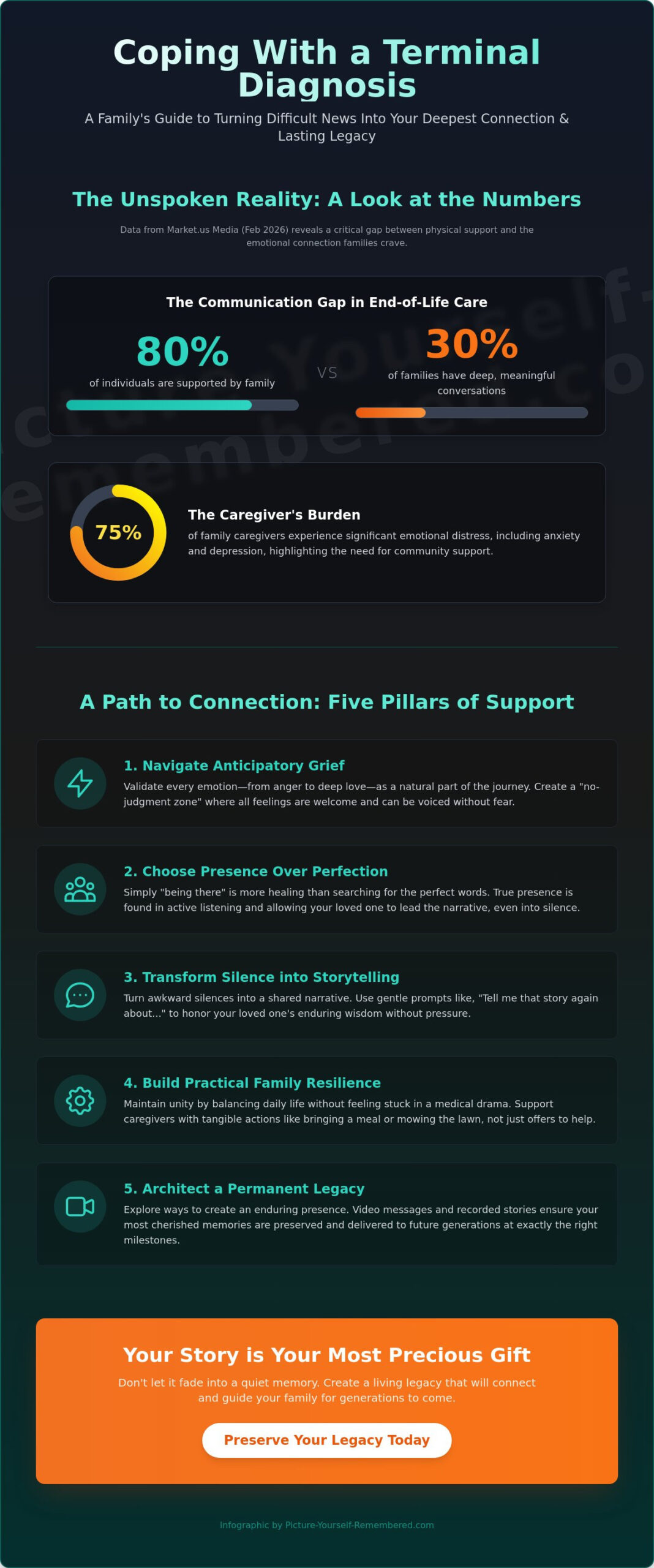
What if the most difficult news your family ever receives becomes the catalyst for your deepest connection yet? While coping with a terminal diagnosis for families often feels like walking through a thick fog of helplessness, it is also an invitation to become the intentional architects of a lasting legacy. Research from Market.us Media in February 2026 shows that 80% of individuals in end-of-life care are supported by family, yet only 30% of people have actually sat down to have the deep, meaningful conversations that matter most. It is completely normal to feel like the ‘elephant in the room’ has taken up permanent residence on your sofa, likely hogging the remote and making every dinner feel a bit stiff.
You probably worry about how the children will remember this season or if your loved one’s unique wisdom will eventually fade into a quiet memory. This guide will help you move past that anxiety to find emotional stability and stay connected through the power of storytelling. You will learn how to communicate without fear and discover practical ways to keep a voice and a narrative alive forever. We will explore how to transform a medical reality into a beautiful act of stewardship, ensuring your family’s essence remains a vibrant part of the future.
Key Takeaways
- Learn to navigate the waves of anticipatory grief by validating every emotion, from anger to deep love, as a natural part of your family’s unique journey.
- Discover why simply “being there”—whether sitting in the garden or watching a favorite film—is often more healing than searching for the perfect words.
- Master the art of coping with a terminal diagnosis for families by transforming awkward silences into a shared narrative that honors your loved one’s enduring wisdom.
- Find practical strategies to maintain family unity and balance your daily routine without feeling like you’re stuck in a very long, very un-funny medical drama.
- Explore how to architect a permanent presence through video messages, ensuring your most cherished stories are delivered to future generations at exactly the right milestones.
Understanding the Long Goodbye: Navigating Anticipatory Grief
The weight of a terminal diagnosis doesn’t wait for a final breath to settle into a home; it arrives the moment the words are spoken. This experience is often called anticipatory grief, which is the unique burden of mourning a loss that hasn’t fully happened yet. It feels like living in two worlds at once, where you’re trying to cherish the present while simultaneously grieving the future. According to research from Market.us Media in February 2026, about 75% of family caregivers experience significant emotional distress, including anxiety and depression. Gaining a deeper Understanding Terminal Illness helps families realize that these feelings aren’t a sign of weakness, but a testament to the depth of their connection.
Coping with a terminal diagnosis for families is rarely a straight line. You might find your family moving through cycles of intense crisis followed by periods of profound unity. It’s okay to feel relief, anger, and deep love all within the span of a single hour. To manage this, try creating a “no-judgment zone” in your home. This is a dedicated time or space where anyone can voice their darkest thoughts or “selfish” frustrations without fear of being shamed. Sometimes, just saying the scary thing out loud takes away its power.
To better understand how to show up for one another during this time, watch this helpful video:
The ‘Elephant in the Room’ and How to Tame It
Silence often feels like a safety net, but it usually acts more like a barrier. We avoid the hard topics because we’re afraid of “breaking” the person we love, yet this silence often fuels more anxiety for everyone involved. Instead of forced, heavy sit-downs, try using “soft entries” into the conversation. You might say, “I was thinking about your favorite childhood memory today, would you tell me that story again?” These gentle nudges invite the person to share their essence without the pressure of a “final” talk. And remember, life doesn’t stop being messy just because it’s precious. You will likely still argue over who left the milk out on the counter or forgot to feed the dog, and that’s perfectly okay. Those little frictions are part of the narrative of a real, lived-in life.
Supporting the Caregivers Within the Family
Within every family, there are often “silent mourners.” These are the individuals so buried in logistics, medication schedules, and appointments that they forget to actually feel their own grief. They are the 60% of caregivers who report high levels of stress according to February 2026 data. If you’re a friend looking to help, skip the “let me know what I can do” text. Most caregivers are too exhausted to delegate. Instead, just bring the casserole, mow the lawn, or drop off a bag of groceries. These small acts of stewardship allow the family to focus on what matters most: being present with each other. When coping with a terminal diagnosis for families, practical peace of mind is often the greatest gift you can offer.
Presence Over Perfection: How to Be There for Each Other
When coping with a terminal diagnosis for families, the pressure to be “perfect” can feel like an impossible weight. We often think we need to say something profound or provide the ultimate comfort to make the pain go away. However, true presence is found in the art of active listening. This means letting your loved one lead the narrative without interruption. If they want to talk about the weather, follow them there. If they want to sit in silence, let the quiet be a shared space of peace. Silence is not an absence of connection; it is a form of respect for the weight of the moment.
Avoid the common trap of toxic positivity. While phrases like “You’ll beat this!” come from a place of love, they can often shut down the person’s real, lived experience. Instead, practice radical empathy. Radical empathy is the courage to sit in the dark with someone without trying to turn on the light. It is acknowledging the pain without trying to fix it. Sometimes, simply “doing” is more meaningful than “talking.” Watching a favorite comedy or sitting together in the garden creates a sense of normalcy that words cannot reach. Honestly, watching a chaotic reality TV show together can be a sacred act of love; it is hard to be overly somber when someone is having a televised meltdown over a ruined souffle.
Communicating with Children and Grandchildren
Children and grandchildren often sense a shift in the home long before they are told the specifics. When coping with a terminal diagnosis for families, it is vital to use age-appropriate language that is honest but gentle. Avoid confusing euphemisms like “going to sleep,” which can make a child fearful of bedtime. Instead, focus on maintaining routines and a sense of “normalcy” to provide them with a feeling of safety. Encourage their questions, no matter how blunt or “weird” they may seem. Children process big changes through curiosity, and answering them honestly builds a foundation of trust that lasts a lifetime.
Establishing a Family ‘Communication Hub’
Managing a flood of well-meaning texts and calls can quickly drain your family’s limited energy. To protect your time, establish a digital “communication hub” using a private group or a dedicated blog to share updates. Designate one “point person” to handle these medical reports so the core family can stay focused on being present with one another. By streamlining the logistics, you create more room for the beautiful act of capturing your family’s most cherished stories. This intentionality ensures that while you manage the present, you are also carefully tending to the seeds of a lasting legacy.
The Silence vs. Storytelling Debate: Why Your Narrative Matters
When we think of inheritance, our minds often jump to bank accounts or physical property, but the most enduring gift you can leave behind is your narrative. Coping with a terminal diagnosis for families often centers on the medical and the practical, yet there is a profound psychological hunger for the “essence” of the person. Sharing your life’s wisdom isn’t just a gift for those who listen; it is a powerful act of stewardship for the person sharing. It provides a sense of purpose and a way to organize a lifetime of experiences into a meaningful legacy. Market.us Media reported in February 2026 that only 30% of individuals have engaged in detailed end-of-life conversations with their families. This gap often leaves loved ones wishing they had asked just one more question about the stories that shaped the family’s identity.
You might feel the urge to stay silent because you think your life hasn’t been “interesting” enough for a grand retelling. This is a common hurdle, but it’s simply not true. Your family doesn’t need a Hollywood script; they need your voice, your specific jokes, and your perspective on the world. You might think your life story is about as exciting as watching paint dry, but to your grandchildren, the story of how you once accidentally dyed the family dog purple is pure gold. Taking the time for recording messages for loved ones ensures that these small, vibrant details aren’t lost to time.
Capturing the ‘Unspoken’ Family History
True family history lives in the spaces between the dates and facts. It’s found in the values you’ve held dear and the life lessons learned the hard way. One practical way to start is by using a “memory jar.” Place it in a central spot and encourage family members to write down the questions they’ve always wanted to ask, like “What was your first car?” or “What’s the best advice you ever ignored?” When you record these answers, remember that your voice inflection provides more comfort than a written letter ever could. The way you laugh at your own mistakes or the gentle tone you use when sharing a piece of wisdom creates a sensory portrait that your family will cherish forever.
Overcoming the Fear of ‘Doing it Wrong’
There is no “perfect” way to say goodbye, and there is certainly no need for high production value when capturing your stories. Coping with a terminal diagnosis for families is already exhausting; don’t add “film director” to your list of responsibilities. Focus on authenticity over aesthetics. A shaky video recorded on a phone in the living room is infinitely more precious than a polished, scripted performance. Your loved ones want to see you as you are, in the environment where you were most loved. Trust that your presence is enough and that your story, told in your own way, is exactly what they need to hear.
Practical Steps for Family Resilience and Daily Life
Resilience isn’t about being “tough” or pretending the diagnosis isn’t there; it is about building a structure that supports your family’s emotional weight while keeping the lights on. Coping with a terminal diagnosis for families requires a delicate balance between the medical routine and the rhythm of normal life. Palliative care plays a vital role here, as it focuses on the quality of life for the entire family unit, not just the patient. While over 40 million people need this care annually, only about 14% receive it according to March 2025 data from Rosewood Nursing. Embracing these services early can provide the emotional and physical relief needed to focus on connection rather than just symptoms.
To maintain unity, consider starting a shared legacy project. This could be anything from compiling a family cookbook to organizing old photographs. These projects give everyone a common goal that isn’t focused on the illness. Here are five practical ways to stay grounded:
- Schedule “no-illness” zones where medical talk is strictly off-limits.
- Maintain regular family dinner times, even if the menu is just takeout.
- Encourage each member to pursue one “normal” hobby or school activity.
- Hold weekly family meetings to check in on everyone’s emotional “battery.”
- Accept help with laundry or errands so you can spend your energy on each other.
Managing the Logistics Without Losing Your Soul
Logistics can easily consume your identity, but you are more than a scheduler. Use a shared digital calendar for appointments, but make sure to block out time for “joy moments,” such as a favorite meal or a movie night. It is absolutely necessary to take off the “caregiver” hat and just be a daughter, a spouse, or a friend. You aren’t failing your duties by stepping away for a coffee or a walk; you are recharging the very energy that allows you to be present. Think of it as a pit stop for your soul. After all, you can’t pour from an empty cup, especially when that cup is currently being used to hold a very suspicious-looking hospital Jell-O.
Finding Small Moments of Joy and Humor
Laughter is often the first thing we think we should give up, yet it is one of our most powerful tools for resilience. Keep making those inside jokes and celebrating the small wins, like a day with more energy or a particularly good cup of tea. These moments of levity don’t diminish the gravity of the situation; they honor the vibrancy of the person you love. Finding ways to embrace digital remembrance allows you to capture these sparks of humor and joy for the future. By focusing on the light of their influence today, you ensure their essence remains a guiding force for years to come. If you’re ready to start securing these precious moments, you can explore our scheduled delivery system to see how we help families bridge the gap between the present and the future.
Preserving the Essence: Building a Legacy That Transcends Time
While much of the journey involves managing the present, the most profound part of coping with a terminal diagnosis for families is looking toward the horizon. You aren’t just preparing for a goodbye; you are architecting a permanent presence. A digital time capsule acts as a bridge between generations, ensuring that your essence isn’t lost to the passage of time. Imagine your voice reaching out to a grandchild on their wedding day or offering a word of comfort during a future graduation. These aren’t just files. They are a secure vault for your heart, archived safely for 99 years to provide lasting peace of mind.
Learning how picture yourself remembered works helps transform the abstract idea of a legacy into a concrete, manageable act of love. By using a scheduled delivery system, you can ensure that your wisdom arrives exactly when it’s needed most. It takes the guesswork out of the future and allows you to focus on the beauty of your story today. This intentionality shifts the focus from what is being lost to what is being preserved.
Beyond the Cloud: A Secure Vault for Your Heart
Scheduled delivery is a powerful tool for families who want to stay connected across the decades. Video messages serve as the ultimate digital heirloom, especially for grandchildren who may not have been born yet. They get to see the sparkle in your eyes and hear the specific cadence of your laughter. If you’re feeling overwhelmed by where to start, here is a simple actionable tip: record a two-minute “I love you” video today. It doesn’t need to be profound or poetic. In fact, if you spend half the video squinting at the screen and asking if the red light is blinking, that’s just part of your charming, authentic narrative. That short clip is the most important one you’ll ever make.
Taking the First Step Toward Peace of Mind
When coping with a terminal diagnosis for families, the sense of stewardship over your own story can be incredibly empowering. A Basic Membership allows you to begin this process with quiet dignity, organizing your video message storage in a way that feels intentional rather than hurried. You are ensuring that your love remains timeless, transcending the physical limits of the present. This isn’t about an end; it’s about a lasting influence that continues to guide and comfort your family for nearly a century. You have the agency to decide how you wish to be perceived by future generations. Start your journey of remembrance today and take the first step toward a legacy that truly endures.
Securing Your Family’s Shared Narrative
Coping with a terminal diagnosis for families is a heavy road to walk, but it is also one paved with opportunities for profound connection. You have learned that presence isn’t about being a superhero; it’s about the simple, radical act of sitting in the dark together. By moving from silence to storytelling, you transform a medical reality into a masterpiece of memory. You can now use these tools to ensure your essence is captured, even if you still can’t quite figure out how to unmute yourself on a video call without help from a teenager. Laughter and legacy are the threads that keep a family’s fabric from fraying during the most difficult seasons.
Founded by Stanley Poe to bridge generational gaps, Picture Yourself Remembered offers a gentle, compassionate way to safeguard your unique narrative. With secure storage for up to 99 years, your voice remains a guiding light for those you love most, reaching through time to offer comfort during future milestones. Take agency over your story and find the peace of mind that comes from being truly prepared for the future. Begin preserving your family’s essence with a Basic Membership and ensure your love is never out of reach. Your story is a treasure worth keeping, and your voice is a gift that deserves to endure.
Frequently Asked Questions
How do I start a conversation about a terminal diagnosis with my family?
Start by using soft entries that invite connection without the pressure of a formal meeting. You might begin by sharing a cherished memory or simply stating that you want to be honest about the road ahead. Research from Market.us Media in February 2026 indicates that only 30% of families have these detailed discussions, so taking the first step is an act of profound courage. Keep the environment quiet and comfortable to allow everyone the space to process their emotions at their own pace.
What is anticipatory grief and is it normal to feel this way?
Anticipatory grief is the weight of mourning a loss that hasn’t happened yet, and it is a completely natural response to a difficult diagnosis. It involves a rollercoaster of emotions, from deep love to sudden anger. Data from February 2026 shows that 75% of family caregivers experience this type of emotional distress. Acknowledging these feelings helps you move through them rather than becoming stuck in the fear of the future.
Can a digital legacy service really help with the grieving process?
Coping with a terminal diagnosis for families is often about finding a sense of agency, and a digital legacy service helps by focusing on what can be preserved. It transforms the overwhelming feeling of loss into a meaningful act of stewardship. By organizing video message storage and setting up a scheduled delivery system, you create a bridge of connection that remains intact for 99 years. This process provides the person sharing their story with a renewed sense of purpose and peace.
How much should I tell my children about a grandparent’s terminal illness?
Tell children the truth using simple, honest words that match their age and developmental level. Avoid confusing language that might make them fear everyday things like sleep or hospitals. Focus on maintaining their daily routines to provide a sense of safety. Children often ask blunt or unusual questions as they process big changes; answering them with radical empathy builds a foundation of trust that helps them feel secure during a time of upheaval.
What are some practical ways to support a caregiver in the family?
The best way to support a caregiver is to handle a specific, tangible task without being asked. Since 60% of caregivers report high stress levels as of February 2026, they are often too exhausted to delegate work. Instead of saying “let me know what I can do,” just mow the lawn, drop off a pre-made dinner, or take the car for an oil change. These small acts of service allow the caregiver to step back from logistics and simply be present with their loved one.
What happens to my video messages if I am no longer here to manage them?
Your video messages are securely archived in our vault and sent out via our scheduled delivery system according to the dates you choose. This system is designed to function independently of your daily management, ensuring your voice reaches your family at future milestones. You don’t need to worry about technical updates or changing platforms. Your narrative is protected for up to 99 years, giving your family a digital heirloom that transcends your physical presence.
How can we make the most of the time we have left together?
Make the most of your time by prioritizing presence over perfection and creating space for everyday joy. Establish no-illness zones where medical talk is replaced by shared hobbies, movies, or favorite meals. Focus on the quality of your connection rather than the quantity of time. Small wins, like a morning spent in the garden or a shared inside joke, are the moments that will eventually form the heart of your family’s lasting narrative.
Is it too late to start recording family stories after a diagnosis?
It is never too late to begin recording, as even a short message captured today is a priceless gift. Coping with a terminal diagnosis for families often involves a lot of waiting, so you might as well use that time to tell a few good stories. Plus, if you wait until you are a perfect storyteller, you will be waiting until the year 3000. Your family really just wants to hear your actual, slightly messy voice right now. A simple two-minute video is the most important one you will ever make.
